


Found across parts of Europe and western Asia, from France and Italy to the Balkans and even Kazakhstan, this elusive viper makes its home in open grasslands, meadows, and mountain slopes—places where it can easily blend into the landscape. Its body is covered in earthy shades of brown, gray, or olive, often decorated with a zigzag pattern running along its back. This clever camouflage helps it hide among grasses and wildflowers, patiently waiting to ambush small prey like lizards, grasshoppers, and mice. Despite its venomous nature, it poses very little threat to humans, as its bite is mild and it almost always chooses to flee rather than fight.
What makes the meadow viper truly special is how well it has adapted to life in tough, changing environments. It prefers cooler habitats compared to most other snakes and can even be found at high altitudes where few reptiles dare to live. Its behavior changes with the seasons—it basks in the sun on chilly mornings but becomes more active during warm summer evenings. In colder months, it hibernates underground to survive harsh winters. This adaptability has made it one of the most resilient vipers in Europe. However, its reliance on undisturbed grasslands has also made it vulnerable. As farmlands expand and natural meadows disappear, meadow viper populations have declined sharply, leading to its classification as an endangered species in many countries.
One particularly interesting fact about the meadow viper is its role as a “bioindicator” species. Because it’s so sensitive to environmental changes, scientists use it to monitor the health of ecosystems. When meadow vipers disappear from an area, it often signals that the environment is being degraded by pollution, farming, or urban development. In this way, the snake serves as a living warning sign that nature is out of balance. Its presence, on the other hand, means the meadow is thriving—clean, healthy, and full of life.
Distribution
 Albania
 Austria
 Official estimate
 Bosnia And Herz.
 Bulgaria
 Croatia
 France
 Hungary
 Italy
Italy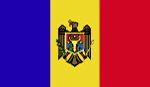 Moldova
 Montenegro
 North Macedonia
 Romania
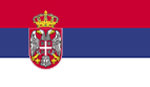 Serbia
 Ukraine
Anything we've missed?
Help us improve this page by suggesting edits. Glory never dies!
Suggest an editGet to know me
Terrestrial / Aquatic
Altricial / Precocial
Polygamous / Monogamous
Dimorphic (size) / Monomorphic
Active: Diurnal / Nocturnal
Social behavior: Solitary / Pack / Herd
Diet: Carnivore / Herbivore / Omnivore / Piscivorous / Insectivore
Migratory: Yes / No
Domesticated: Yes / No
Dangerous: Yes / No




