


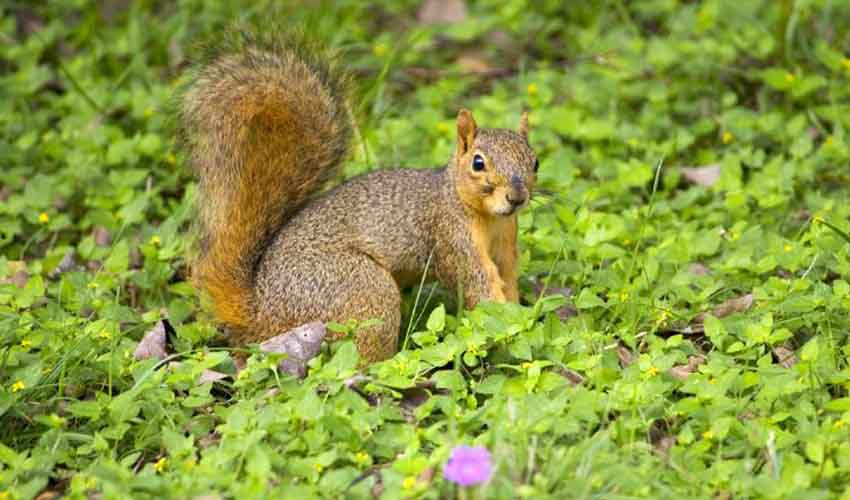
A large and handsome tree squirrel found in parts of Mexico and the southwestern United States, especially in wooded mountain areas. It is bigger and heavier-looking than many familiar backyard squirrels, with a long, full tail, strong claws, and a sturdy body built for climbing. Its fur can vary, but it is often grayish, brownish, or rusty, with lighter underparts and a thick tail that helps it balance as it moves through trees. Compared with smaller, quicker squirrels, such as dwarf squirrels, the Mexican fox squirrel has a more powerful, bold appearance. It looks like a forest squirrel made for tall trees, rough bark, and wide branches.
One thing that makes the Mexican fox squirrel interesting is its connection to pine-oak woodlands, mountain forests, and canyon habitats. It is not simply a city squirrel that lives comfortably around sidewalks and trash bins. Instead, it is more closely tied to natural wooded areas where it can find nuts, seeds, fruits, flowers, bark, and other plant foods. Its strong back legs help it leap between branches, while its sharp claws allow it to grip tree trunks securely. Its large, bushy tail serves as a balancing tool, a warm cover, and a signal flag. When alarmed, it may flick its tail or rush through the trees to escape danger.
The Mexican fox squirrel differs from many other squirrels in its size, forest-dwelling lifestyle, and somewhat limited range. Some common squirrels are widespread across parks, farms, and cities, but this species is more closely associated with certain mountain and woodland regions. It may spend much of its time in trees, but it can also come down to the ground to search for fallen nuts, seeds, and fruit. Like other tree squirrels, it may help forests by dispersing seeds or burying them. When some of those seeds are forgotten, they can grow into new trees. In this way, the Mexican fox squirrel can act like a quiet forest gardener.
Distribution
 Mexico
 United States
Anything we've missed?
Help us improve this page by suggesting edits. Glory never dies!
Suggest an editGet to know me
Terrestrial / Aquatic
Altricial / Precocial
Polygamous / Monogamous
Dimorphic (size) / Monomorphic
Active: Diurnal / Nocturnal
Social behavior: Solitary / Pack / Herd
Diet: Carnivore / Herbivore / Omnivore / Piscivorous / Insectivore
Migratory: Yes / No
Domesticated: Yes / No
Dangerous: Yes / No




