


The smallest and most slender of the loon family, yet it carries the same calm, almost ancient presence you see in its larger relatives. Found across Arctic and subarctic regions of North America, Europe, and Asia, it spends its summers breeding on quiet tundra ponds before migrating to coastal waters for winter. Compared to other loons, it has a more delicate build and a graceful posture, often holding its bill slightly tilted upward, as if listening to the wind or watching the sky for passing clouds.
In breeding season, the red-throated loon transforms into a striking bird: its plain winter plumage gives way to a smooth gray head, fine white stripes on the neck, and a deep rust-red throat patch that glows in the soft Arctic light. Outside breeding months, it returns to a more modest look — clean white underside, mottled gray back, and a pale face — blending in perfectly with stormy northern seas. Unlike most loons, it can take off from very small bodies of water, a useful trait when nesting on shallow tundra pools. It often launches into the air with a surprising burst of energy, rising quickly rather than performing the long water-run most loons require.
Its behavior reflects the sparseness of its northern home. The red-throated loon is quiet and focused, feeding mostly on small fish, crustaceans, and aquatic invertebrates. It picks prey near the surface more often than diving deep like other loon species, though it’s still a strong and capable underwater hunter. During breeding season, pairs are highly territorial and form strong bonds, often returning to the same pond year after year. Their nest is typically a simple scrape near water, allowing quick escapes into the pond at the first sign of danger — crucial in regions where foxes, gulls, and jaegers keep watch for eggs and chicks.
Distribution
 Albania
 Algeria
 Armenia
 Austria
 Azerbaijan
 Bahamas
 Belarus
 Belgium
 Bosnia And Herz.
 Bulgaria
 Canada
 China
China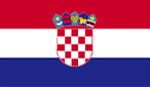 Croatia
 Czechia
 Denmark
 Estonia
 Faroe Islands
 Finland
 France
 Gambia
 Georgia
 Germany
 Gibraltar
 Greece
 Greenland
 Hungary
 Iceland
 India
India Iran
Iran Ireland
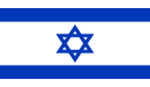 Israel
 Italy
Italy Japan
Japan Kazakhstan
 Korea
Korea Latvia
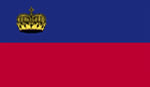 Liechtenstein
 Lithuania
 Luxembourg
 Malta
Malta Mexico
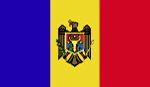 Moldova
 Monaco
 Mongolia
 Montenegro
 Morocco
 Netherlands
 North Korea
 North Macedonia
 Norway
 Pakistan
 Poland
 Portugal
 Romania
 Russia
 Saint Pierre
 Serbia
 Slovakia
 Slovenia
 Spain
Svalbard
Spain
Svalbard Sweden
 Switzerland
 Taiwan
 Tunisia
 Turkmenistan
 Turkey
 Ukraine
 United Kingdom
 United States
Anything we've missed?
Help us improve this page by suggesting edits. Glory never dies!
Suggest an editGet to know me
Terrestrial / Aquatic
Altricial / Precocial
Polygamous / Monogamous
Dimorphic (size) / Monomorphic
Active: Diurnal / Nocturnal
Social behavior: Solitary / Pack / Flock
Diet: Carnivore / Herbivore / Omnivore / Piscivorous / Insectivore
Migratory: Yes / No
Domesticated: Yes / No
Dangerous: Yes / No




