


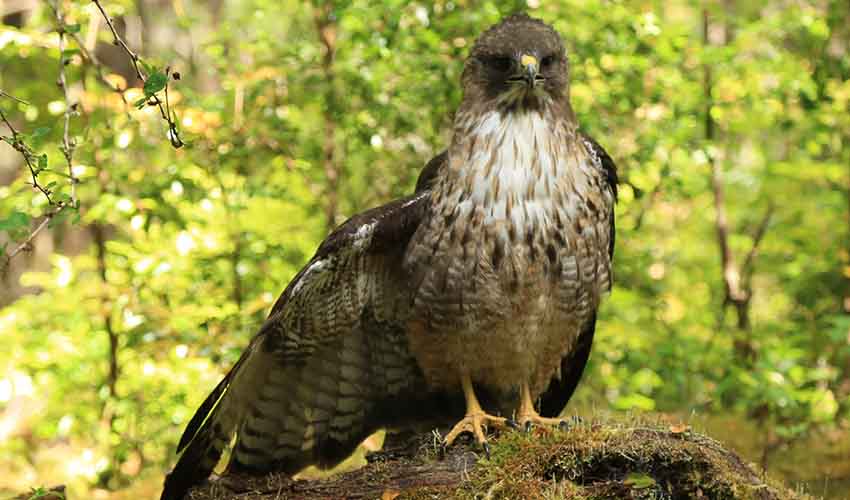
A striking bird of prey found mainly in Central and South America, where it inhabits open woodlands, savannas, and forest edges. It is a medium-sized hawk with long, broad wings and a strong, well-balanced body built for soaring. One of its most noticeable features is its reddish or rufous tail, which stands out clearly in flight. Its body is generally dark brown, with lighter markings on the underside, giving it a bold and confident appearance against open skies.
This hawk is especially known for its graceful flight. The rufous-tailed hawk often spends long periods gliding high above the ground, using warm air currents to stay aloft with little effort. From this high vantage point, it scans the land below for prey. When it spots movement, it descends in a controlled swoop rather than a fast chase. Its sharp eyesight allows it to detect small animals even from great heights, making it a highly effective hunter in open environments.
What sets the rufous-tailed hawk apart from other hawks is its combination of size, color, and behavior. The reddish tail is a key feature that helps distinguish it from similar species, especially when seen from below. Compared to forest-dwelling hawks, it prefers more open landscapes where it can soar freely. It feeds mainly on small mammals, reptiles, birds, and large insects, showing a flexible diet that helps it adapt to different regions and seasons. This adaptability has allowed it to thrive in a wide range of habitats.
The rufous-tailed hawk is usually seen alone or in pairs, especially during the breeding season. It builds large stick nests high in trees or on cliff ledges, choosing locations that offer a wide view of the surrounding area. Both parents take part in caring for the young, sharing duties such as guarding the nest and bringing food.
Distribution
 Argentina
 Chile
ChileAnything we've missed?
Help us improve this page by suggesting edits. Glory never dies!
Suggest an editGet to know me
Terrestrial / Aquatic
Altricial / Precocial
Polygamous / Monogamous
Dimorphic (size) / Monomorphic
Active: Diurnal / Nocturnal
Social behavior: Solitary / Pack / Herd
Diet: Carnivore / Herbivore / Omnivore / Piscivorous / Insectivore
Migratory: Yes / No
Domesticated: Yes / No
Dangerous: Yes / No




