


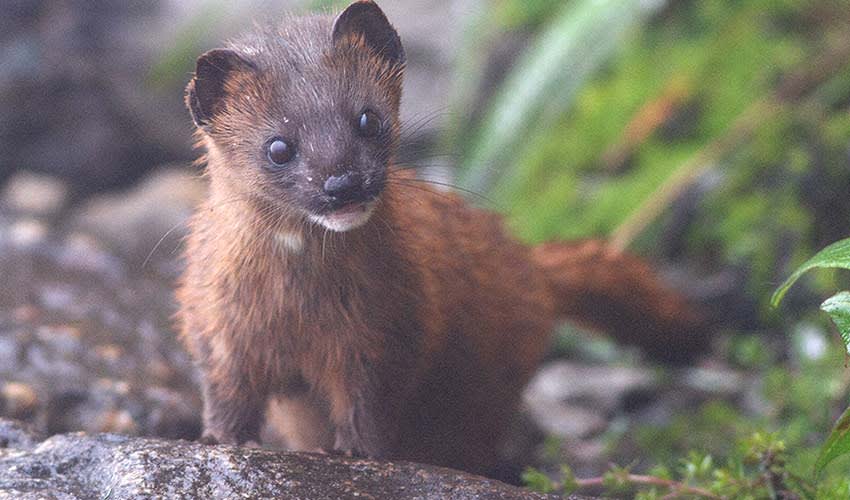
A sleek, adaptable predator found across a huge stretch of northern and eastern Asia, from Siberia and Mongolia to China, Korea, and parts of Southeast Asia. With a long, tube-shaped body, short legs, and a bushy tail, it moves with the elastic, slinking grace typical of mustelids. Its fur ranges from warm golden-brown to reddish tones, often with a darker mask around the eyes, giving it a fox-like look in miniature. Compared to the Japanese weasel, it tends to be slightly larger, longer-tailed, and more robust-headed, characteristics that help distinguish the two in areas where they overlap (including northern Japan, where this species was introduced).
Siberian weasels are fearless and efficient hunters, feeding on rodents, birds, frogs, insects, fish, and even fruit when available. In snowy regions, they dive into burrows and tunnels like a furry torpedo, chasing prey through tight spaces where few other predators can follow. They’re also strong swimmers and nimble climbers, allowing them to move across mixed habitats — taiga forests, mountain slopes, wetlands, farmlands, and rocky river valleys. Mostly active at night or twilight, they patrol their territory with curious, restless energy, always alert for movement or scent trails.
Like most mustelids, they are solitary, except during mating season. Females raise litters in dens hidden in rock crevices, hollow logs, or burrows taken over from rodents. The kits grow fast and learn hunting skills through energetic play and imitation. Their curious nature and lack of fear can bring them close to human settlements; historically, they’ve been known to raid poultry coops or explore barns and markets in search of food.
Distribution
 Bhutan
 China
China India
India Japan
Japan Korea
Korea Laos
Laos Mongolia
 Myanmar
 Nepal
Nepal North Korea
 Pakistan
 Russia
 Taiwan
 Thailand
Anything we've missed?
Help us improve this page by suggesting edits. Glory never dies!
Suggest an editGet to know me
Terrestrial / Aquatic
Altricial / Precocial
Polygamous / Monogamous
Dimorphic (size) / Monomorphic
Active: Diurnal / Nocturnal
Social behavior: Solitary / Pack / Herd
Diet: Carnivore / Herbivore / Omnivore / Piscivorous / Insectivore
Migratory: Yes / No
Domesticated: Yes / No
Dangerous: Yes / No




