


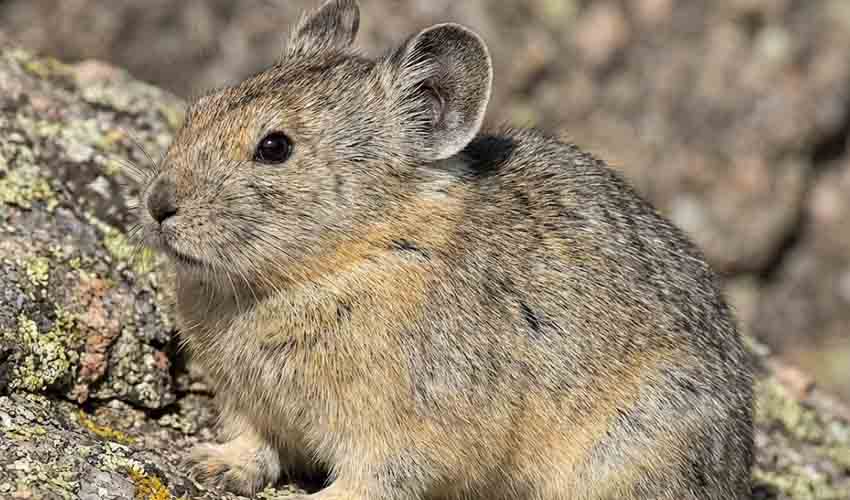
A small, tailless rabbit relative that looks like a rounded little “field sprite” built for wide, windy grasslands. It has short legs, a compact body, and small, rounded ears—much less “bunny” and more “tiny, alert potato with legs.” Its fur is usually sandy-brown to grayish, a perfect match for dry grass, dusty soil, and sun-bleached steppe. Unlike rabbits that often bolt across open ground, a steppe pika typically makes quick, low dashes and stops fast, because its whole safety plan is based on staying close to a burrow entrance.
When most people hear “pika,” they imagine steep alpine slopes and boulder fields, but the steppe pika lives in open plains and rolling steppe where there may be few rocks at all. That difference changes everything. Instead of diving into stone cracks, it relies on digging and maintaining underground tunnels—its home, its hideout, its temperature shelter, and its nursery all in one. This burrow-based life also makes it more “neighborhood” oriented than many mountain pikas: you can get clusters of burrows in a good patch of habitat, with several animals using the area and keeping an eye out for trouble. In short, if Rocky Mountain pikas are cliffside tenants, the steppe pika is an underground homeowner.
The steppe itself can be extreme—hot sun, cold winds, and sudden weather swings—so the steppe pika is a master of timing and efficiency. It’s active in daylight, but it tends to pick safer, more comfortable moments to feed, and it retreats underground when conditions get too harsh. One of the most fun pika habits is “hay-making,” and the steppe pika is known for it: during the growing season, it gathers mouthfuls of plants, carries them back, and lets them dry into stored food so it can keep eating when fresh greens disappear.
Distribution
 China
China Kazakhstan
 Russia
Anything we've missed?
Help us improve this page by suggesting edits. Glory never dies!
Suggest an editGet to know me
Terrestrial / Aquatic
Altricial / Precocial
Polygamous / Monogamous
Dimorphic (size) / Monomorphic
Active: Diurnal / Nocturnal
Social behavior: Solitary / Pack / Herd
Diet: Carnivore / Herbivore / Omnivore / Piscivorous / Insectivore
Migratory: Yes / No
Domesticated: Yes / No
Dangerous: Yes / No




