


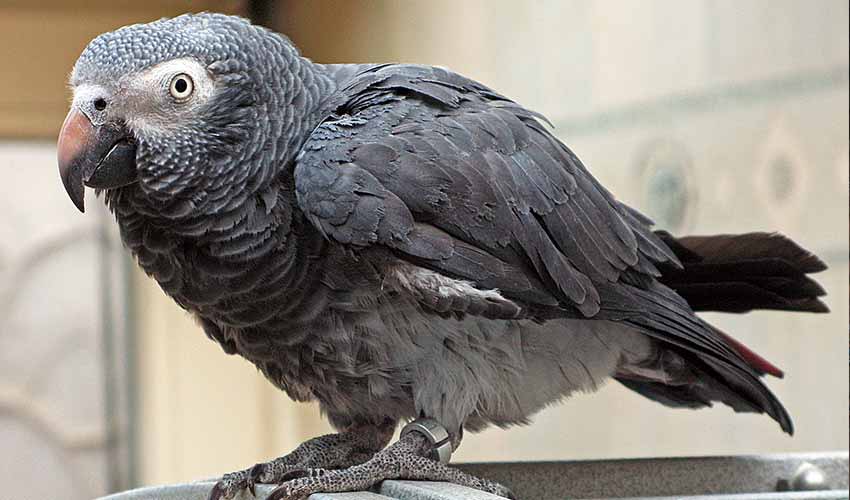
A smart, sturdy-looking African parrot best known for its gentle confidence and its talent for learning sounds. It is closely related to the more widely known African grey parrot, but it has its own distinct look and personality. Timneh parrots are generally smaller and stockier, with darker charcoal-gray feathers and a maroon to deep red tail rather than a bright scarlet one. The upper beak is often pale and horn-colored, giving the face a two-tone look that many people find especially expressive. In the wild, the Timneh parrot is native to the western part of Africa, where it lives in forests, wooded savannas, and areas with tall trees near farms and villages.
Many keepers and trainers describe Timnehs as a bit more easygoing and adaptable in new situations, often settling in faster than larger greys—though every individual bird has its own temperament. They can be just as bright and curious, but they may show it with a slightly calmer, less wary style. Their voices also have a reputation for being clear and varied. While some parrots focus on a few loud calls, Timnehs often build wide sound collections: whistles, beeps, phrases, and perfectly timed household noises that can fool people into looking for the source.
In daily life, Timneh parrots are problem-solvers. In the wild, they eat seeds, fruits, nuts, and blossoms, using the beak like a precision tool to peel, crack, and hold food. They are also skilled climbers, using the beak as a “third hand” to pull themselves along branches. Socially, they can be affectionate with a trusted partner and very observant of what’s happening around them. That watchful intelligence is part of what makes them such compelling companions for people, but it also means they get bored easily.
Distribution
 Côte D’ivoire
 Guinea-Bissau
 Guinea
 Liberia
 Sierra Leone
Anything we've missed?
Help us improve this page by suggesting edits. Glory never dies!
Suggest an editGet to know me
Terrestrial / Aquatic
Altricial / Precocial
Polygamous / Monogamous
Dimorphic (size) / Monomorphic
Active: Diurnal / Nocturnal
Social behavior: Solitary / Pack / Flock
Diet: Carnivore / Herbivore / Omnivore / Piscivorous / Insectivore
Migratory: Yes / No
Domesticated: Yes / No
Dangerous: Yes / No




