Aegolius
These owls may be small, but they’re fierce and feisty
These owls are found throughout North and South America, and even across parts of Europe and Asia, as in the case of the Boreal owl. What they share in common is their compact size, rounded heads without ear tufts, and large, expressive eyes — features that make them look perpetually wide-eyed and curious. Despite their tiny size, Aegolius owls are skilled nocturnal hunters and perfectly adapted to life in dense forests where stealth and silence are everything.
One of the defining characteristics of Aegolius owls is their extraordinary hearing. Their facial disks — the circular arrangement of feathers around their eyes — act like radar dishes, channeling sound toward their ears, which are set at slightly different heights on their heads. This uneven placement lets them pinpoint the location of prey, even under snow or leaf litter, with remarkable precision. They feed mostly on small mammals such as voles, mice, and shrews, but will also take insects or small birds when available. Their feathers are soft-edged to silence their flight, allowing them to swoop down on prey unseen and unheard. Though small, these owls are efficient predators, relying on patience, sharp vision, and acute hearing rather than brute strength.
Another intriguing trait of Aegolius owls is their secretive and nomadic behavior. Most species are not strongly territorial year-round. Instead, they move around in response to prey availability, especially in northern regions where food supplies can vary from year to year. Many species, like the Northern saw-whet owl, undertake long nocturnal migrations that are still not fully understood by scientists. During these journeys, they may show up in unexpected places — sometimes even in suburban areas or backyards. Because they’re small, quiet, and camouflaged, they often go unnoticed, adding to their air of mystery.

Species in this genus


Boreal owl
Comfortable hunting in almost complete darkness, relying heavily on their incredible hearing rather than vision alone
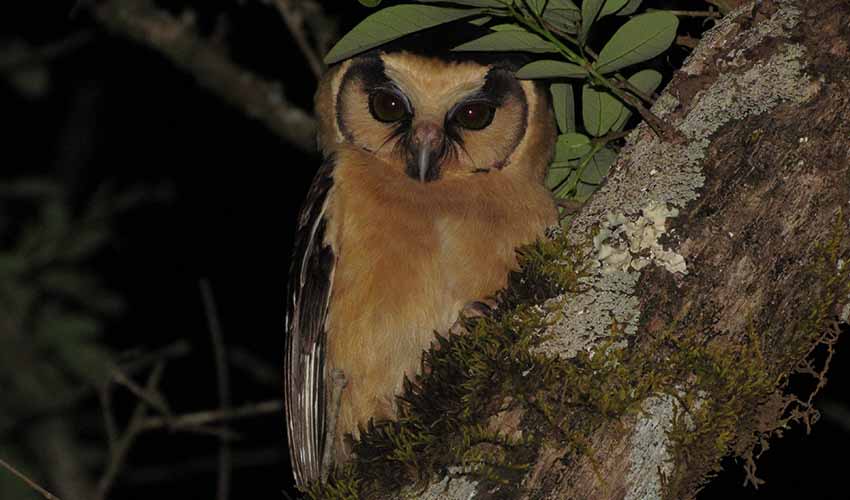
Buff-fronted owl
Their coloring and stillness can make them look like part of the bark rather than a living bird

Northern saw-whet owl
Its eyes make up nearly half the size of its skull, giving it excellent night vision but little room for movement

