


A small yet powerful owl that lives across the cold forests of the Northern Hemisphere, particularly in boreal and mountain woodlands. Despite its wide range, it often goes unnoticed because of its quiet nature and preference for dense forest cover. The boreal owl has a rounded head with no ear tufts, a pale facial disk outlined in dark markings, and striking yellow eyes that give it an alert, focused expression. Its brown and white speckled feathers help it blend perfectly with tree bark, making it difficult to spot during the day.
What distinguishes the boreal owl from many other owl species is its close relationship with northern forests and its reliance on tree cavities. Rather than building its own nest, it uses holes made by woodpeckers, especially in old or dead trees. This dependence on mature forests means the boreal owl is closely tied to healthy woodland ecosystems. Unlike larger owls that patrol wide open areas, this species hunts within the forest, moving quietly between trees. It is mostly active at night, though it may also hunt during daylight in winter when nights are long and food is scarce.
The boreal owl is a highly skilled hunter despite its small size. It feeds mainly on small mammals such as voles, along with birds and insects when available. One of its most impressive abilities is its hearing; its ears are slightly uneven, allowing it to pinpoint sounds with remarkable accuracy. This adaptation helps it locate prey hidden beneath snow or leaf litter. Once it detects movement, the owl swoops down quickly and captures its prey with sharp talons. Compared to many owls, it often hunts in complete darkness, relying more on sound than sight.
Distribution
 Andorra
 Armenia
 Austria
 Azerbaijan
 Belarus
 Belgium
 Bosnia And Herz.
 Bulgaria
 Canada
 China
China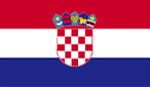 Croatia
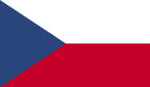 Czechia
 Denmark
 Estonia
 Finland
 France
 Georgia
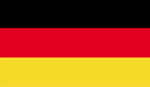 Germany
 Greece
 Hungary
 India
India Italy
Italy Japan
Japan Kazakhstan
 Kyrgyzstan
 Latvia
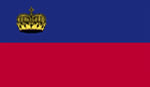 Liechtenstein
 Lithuania
 Luxembourg
 Mongolia
 Montenegro
 Netherlands
 North Macedonia
 Norway
 Poland
 Romania
 Russia
 Saint Pierre
 Serbia
 Slovakia
 Slovenia
 Spain
Spain Sweden
 Switzerland
 Tajikistan
 Turkey
 Ukraine
 United Kingdom
 United States
Anything we've missed?
Help us improve this page by suggesting edits. Glory never dies!
Suggest an editGet to know me
Terrestrial / Aquatic
Altricial / Precocial
Polygamous / Monogamous
Dimorphic (size) / Monomorphic
Active: Diurnal / Nocturnal
Social behavior: Solitary / Pack / Herd
Diet: Carnivore / Herbivore / Omnivore / Piscivorous / Insectivore
Migratory: Yes / No
Domesticated: Yes / No
Dangerous: Yes / No




