Aprasia
Most of their life is spent hidden under soil, rocks, or leaf litter—you can walk right over them and never know
A group of tiny, secretive, worm-like lizards known as worm-lizards, and they’re all found in Australia. Even though they look a lot like small snakes or big earthworms at first glance, they’re actually legless lizards in the family Pygopodidae, a group that’s closely related to geckos. Their bodies are long, smooth, and slender, usually only a few centimeters around, with a small, blunt head and a short, stubby tail.
Unlike snakes, they still have a lizard-style tongue (not long and forked) and, in many species, tiny flap-like remnants of hind legs near the tail. Most Aprasia species are pale brown, grey, or yellow-brown above with a lighter underside, sometimes with neat stripes or subtle patterns that help them blend into sandy or stony soil.
Rather than basking on rocks like many lizards, Aprasia species spend much of their time hidden under the surface: in loose sand, under rocks and logs, in grass tussocks, or inside tunnels dug by other creatures. A lot of them are strongly tied to semi-arid and mallee habitats with sandy soils and plenty of surface litter. They move using smooth side-to-side waves of the body, sliding through soil and ant tunnels like living noodles. Their heads are small and strong enough to wedge into tight gaps, and their eyes are tiny—good enough to tell light from dark but not built for long-distance vision. When they’re disturbed, some species will wave or lift their short, often brightly colored tail, which may act as a decoy to draw attacks away from the more important head end.
Diet-wise, Aprasia are ant specialists. Studies of several species show that more than 90% of their food is made of ant eggs, larvae, and pupae. They locate ant nests, slip into the tunnels, and then “binge” on the brood, gulping down soft, nutritious ant babies while mostly ignoring the hard-bodied adult workers.

Species in this genus
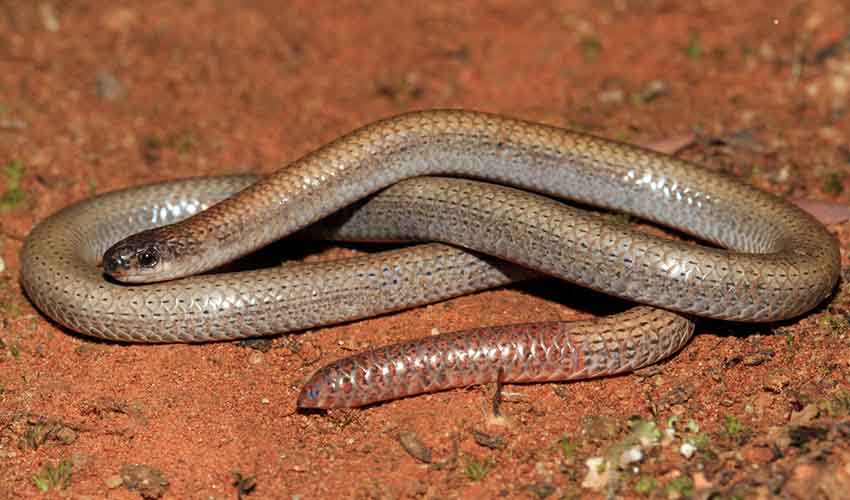


Pink-tailed worm-lizard
Most people think it’s a tiny snake or fat worm at first glance, but it’s actually a legless lizard

