Craspedocephalus
Many species are indicators of healthy, undisturbed ecosystems, thriving only in intact forests
A mesmerizing group of arboreal pit vipers found across South and Southeast Asia, known for their vibrant colors, stealthy hunting habits, and elegant presence among the trees. Often called Asian green pit vipers, these snakes are a perfect blend of beauty and danger—small to medium-sized serpents that use camouflage, patience, and heat detection to master life in the forest canopy. The name Craspedocephalus comes from Greek roots meaning “fringed head,” referring to the slight ridge or scale fringe along the sides of their heads, which gives them a distinctive, sculpted look.
Members of this genus are typically slender, tree-dwelling snakes, ranging from 50 centimeters to over a meter (1.5–3 feet) in length. Their bodies are vividly colored—usually in shades of green, yellow-green, or olive, sometimes with splashes of red, brown, or turquoise. This coloration provides perfect camouflage among leaves and branches, helping them ambush prey or hide from predators. Some species even sport striking patterns like striped tails or colored lines along their flanks. The head is triangular and distinct from the neck, a hallmark of pit vipers, and each species possesses the characteristic heat-sensing pits between the eyes and nostrils that allow them to “see” the body heat of their prey, even in total darkness.
Craspedocephalus species are primarily nocturnal ambush predators, feeding on frogs, lizards, small birds, and rodents. They rely on stillness and surprise—remaining motionless until prey comes close, then striking with lightning speed and precision. Their venom is hemotoxic, causing tissue damage and blood clotting in prey, but they are not aggressive toward humans and usually bite only in self-defense. These snakes are found in a range of habitats—from humid rainforests and bamboo groves to mountain slopes and plantations—often near streams where amphibians are plentiful.

Species in this genus
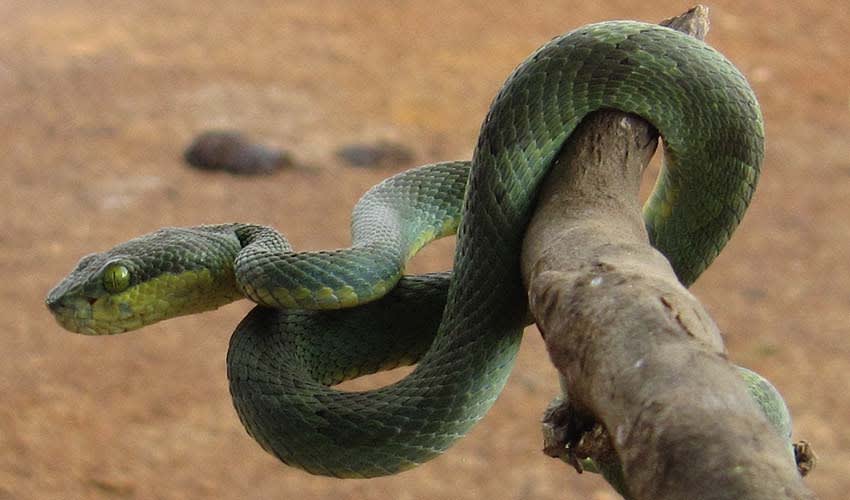


Common bamboo viper
Despite its name, it’s not restricted to bamboo—it also thrives in forests, hills, and near rivers

