Eupodotis
Can fly, but they usually prefer long, steady walks—flight is often a last resort
These birds are built for life on foot: long legs for steady walking, strong bodies for endurance, and plumage patterned in browns, buffs, and grays that help them blend into grassland, scrub, and savanna. Many people first notice their “upright” look, with a proud posture and a watchful head that seems to scan the horizon nonstop. Like other bustards, members associated with Eupodotis spend most of their time walking rather than flying, conserving energy in hot, open habitats where food can be scattered, and predators can be spotted from far away.
A big part of what makes Eupodotis interesting is the way these birds balance being noticeable and being invisible. When they stand still, their mottled colors can make them vanish against dry grass and soil. But during breeding season, males can switch modes completely. They may perform bold displays that involve puffing up feathers, stretching the neck, showing off contrasting patches, and using posture and movement to look larger and stronger than they are. In some species that have been placed in or near Eupodotis, the males’ “show” can include striking visual signals—like raising the head, lifting the body, and making sudden, attention-grabbing movements—meant to be seen across open ground.
Eupodotis bustards are also shaped by a very practical lifestyle. They tend to be flexible eaters, taking a mix of insects, seeds, shoots, and other plant parts, with occasional small animals when available. That “whatever works” diet is a survival advantage in places where rainfall is unpredictable. After rains, insects can surge, and plants put out fresh growth, and these birds can quickly shift to take advantage of the sudden abundance. In dry spells, they lean more on tougher plant foods and whatever seeds they can find. Their behavior often reflects this: slow, steady walking punctuated by frequent pauses to feed, watch, and reassess the surroundings.

Species in this genus
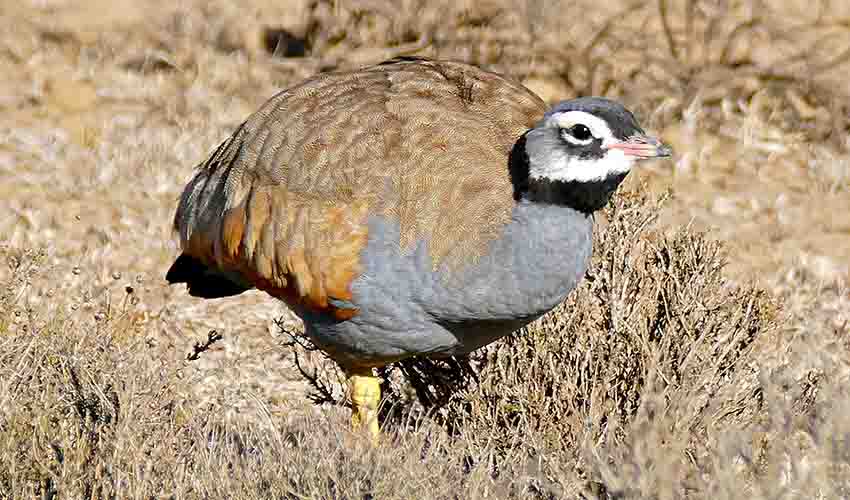


Blue bustard
Instead of a pretty song, it makes throaty, croaking calls that can sound a bit frog-like

