Fregetta
Among the few seabirds that use smell to locate food, often detecting plankton blooms invisible to the eye
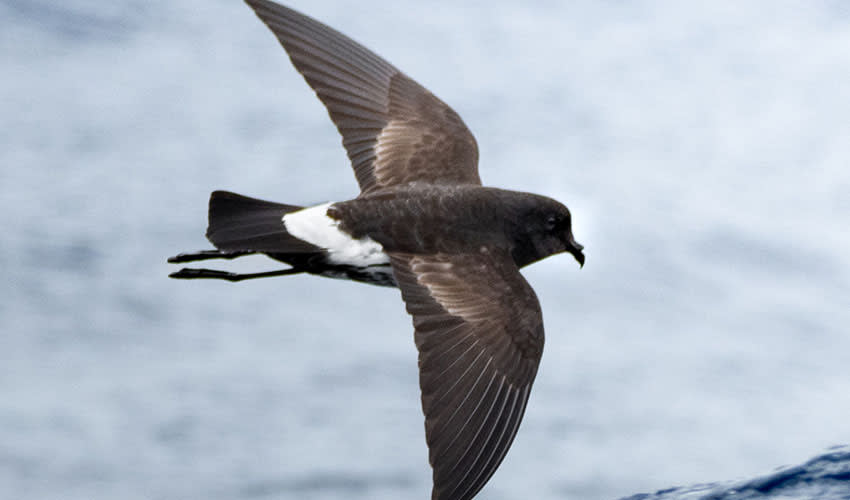
These small, agile ocean wanderers are part of the family Oceanitidae and are known for their delicate, fluttering flight, dark plumage accented with white rumps or bellies, and their ability to survive far from land for months at a time. Found mainly across the Southern Hemisphere, Fregetta species spend nearly their entire lives over the open ocean, returning to land only to breed on remote islands. Despite their global range, they remain poorly understood, often glimpsed only fleetingly as silhouettes skimming across the waves in stormy seas.
These birds have long wings, short forked tails, and slender legs that dangle slightly as they patter across the water’s surface. This “pattering” behavior, where the bird appears to walk on the sea while feeding, is one of the storm-petrel’s most enchanting sights. They pick off tiny crustaceans, plankton, fish eggs, and other surface organisms, relying on keen eyesight and sensitive smell to find food even in the vast, open ocean.
Breeding is secretive and typically occurs on remote islands or rocky islets, often in burrows, rock crevices, or under dense vegetation. They nest in colonies, but their nocturnal habits and isolated locations make them extremely hard to study. Parents alternate between incubating their single egg and foraging trips that may last several days. Chicks grow slowly in the safety of their burrows, eventually fledging under cover of darkness to join their parents at sea. For much of the year, Fregetta storm-petrels live entirely beyond human sight — true denizens of the deep ocean.
These birds face a range of modern threats, including invasive predators (rats, cats, and pigs) on breeding islands, light pollution, climate change, and marine pollution. Because many colonies are so remote, population monitoring is difficult, meaning declines can go unnoticed for years. Conservation work focuses on eradicating invasive species, protecting island nesting habitats, and conducting at-sea surveys to better understand their movements.

Species in this genus


New Zealand storm petrel
Known only from museum specimens for over 150 years before its rediscovery in 2003

