Myiopsitta
Among the few parrots famous for building their own stick nests rather than simply finding a hole to use
These birds are small to medium-sized parrots with bright green backs, gray faces and chests, and long pointed tails. At first glance, they may look like many other green parrots, but Myiopsitta stands out because of its unusual social life and nesting habits. While many parrots use tree holes for nesting, monk parakeets build large stick nests out in the open. This makes them very different from most parrots, which usually depend on natural cavities in trees or cliffs.
One of the most amazing things about Myiopsitta is that its nests can become huge community homes. Several pairs may live in the same large nest structure, with each pair having its own separate “room” or chamber. Over time, these nests can grow very large and heavy, almost like apartment buildings made of twigs. Some are built in tall trees, while others are placed on power poles, towers, or other human-made structures. This talent for building and living together helps explain why monk parakeets are so successful in many places. They can survive not only in their native South America but also in cities and towns far from their original home.
Myiopsitta parrots are also known for being loud, clever, and highly social. They often move in noisy flocks, calling to one another as they fly or feed. Their voices may sound harsh, but those calls help keep the group connected. Like many parrots, they are intelligent and curious. They use their strong beaks to crack seeds, chew on plant parts, and explore their surroundings. Their diet can include seeds, fruits, flowers, buds, and grains. This flexible diet is another reason they can adapt so well to different environments. Compared with more specialized birds that need certain foods or habitats, Myiopsitta parrots are practical survivors.

Species in this genus
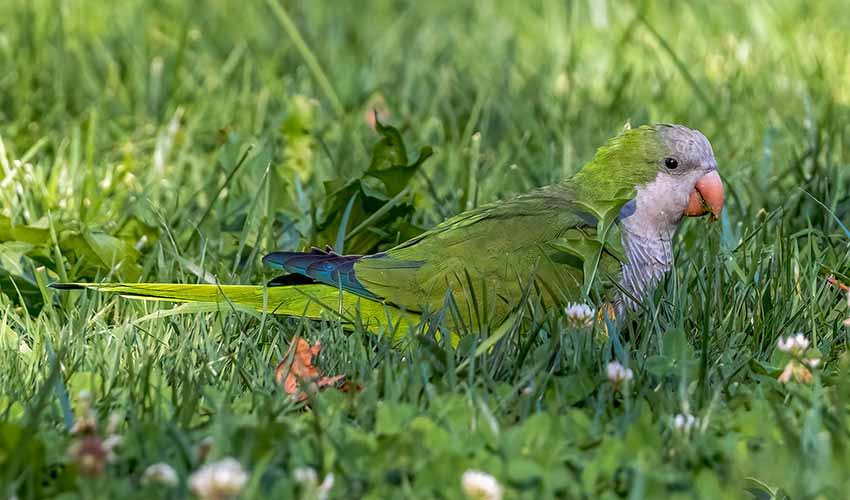


Monk parakeet
A clever, hardworking, city-ready survivor

