Notamacropus
Licking their forearms helps them cool down — a clever biological air-conditioning system
Agile, alert marsupials that hop their way through Australia, Tasmania, and Papua New Guinea. While they share the classic kangaroo blueprint — strong hind legs, long balancing tail, and a pouch for raising young — members of Notamacropus tend to be smaller and more nimble than their big kangaroo cousins. Their compact bodies, pointed muzzles, and expressive ears give them a lighter, more delicate look, and they move with an air of effortless athleticism. Some species, like the red-necked wallaby, are familiar wildlife in Australian parks and bushlands, while others, like the tammar wallaby, have fascinating island histories and unique adaptations tied to specific regions.
Wallabies in this genus are skilled survivors of varied habitats — from coastal scrub and eucalyptus forests to grasslands and even rugged, hilly terrain. Their powerful hind limbs allow them to bound at impressive speeds and clear obstacles in single hops, while their forelimbs are used delicately for feeding and grooming. They mainly eat grasses, leaves, and shoots, making them important plant browsers that help shape Australian ecosystems. Because they are crepuscular and nocturnal, they often rest in shaded spots during the day and become more active at dusk and dawn, when the air is cooler and predators are less active. Their social behavior varies — some species live mostly alone or in loose groups, while others may gather in more stable mobs when food is abundant.
Raising young — joeys — is one of the most endearing aspects of Notamacropus life. Newborn joeys are tiny and underdeveloped, immediately climbing into the mother’s pouch after birth. There they nurse and grow for months, gradually poking their heads out and eventually hopping in and out as they gain strength. Mothers are attentive and patient, and joeys often stay close even after leaving the pouch for good.

Species in this genus


Parma wallaby
Has a “mini wallaby” vibe compared with bigger, more familiar species
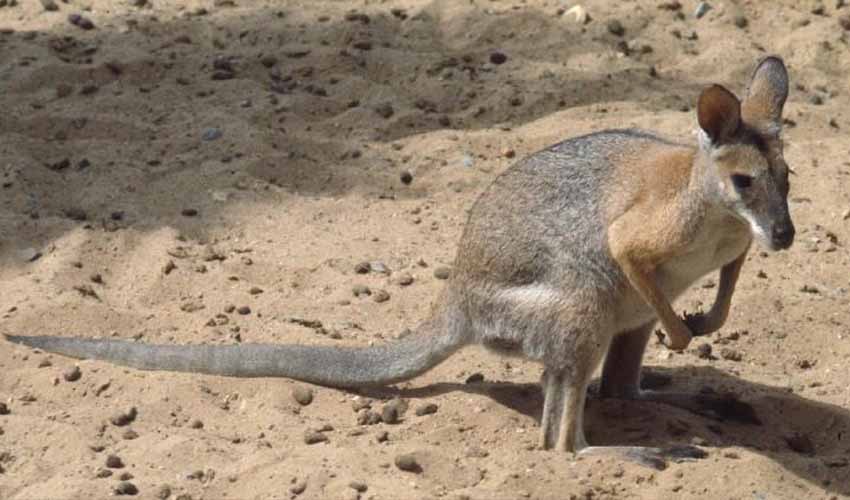
Black-striped wallaby
Their ears are like built-in radar dishes: they constantly swivel and listen, even while the animal is calmly grazing

Red-necked wallaby
Sometimes sniff noses when meeting peacefully — a marsupial handshake

Tammar wallaby
One of the most studied marsupials, so it pops up a lot in research about reproduction and animal behavior

Western brush wallaby
Feel safest in thick shrubs and woodland edges, not wide-open grass
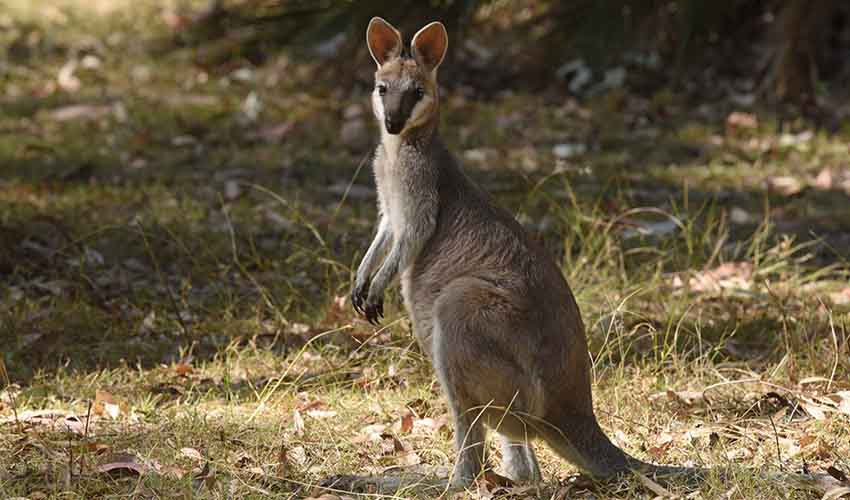
Whiptail wallaby
Tend to do a repeating “lookout loop” while feeding: munch for a bit, head up, scan, ears swivel, then back to munching

