Numenius – Curlews
The name comes from their own voice
Think of them as the “crescent-bill waders”: medium-to-large birds with long legs, mottled brown plumage, and that trademark down-curved bill that looks like a new moon. They use this flexible “probe” to reach deep into mud, sand, and marshy ground for worms, shellfish, and other invertebrates that most birds simply can’t get to. Curlews are found across much of the globe, especially in open wetlands, estuaries, mudflats, and coastal grasslands, and many species are long-distance migrants linking Arctic or temperate breeding grounds with warmer wintering areas thousands of kilometres away.
Depending on how you count, there are nine named Numenius species, but not all are still with us. The best known are the Eurasian curlew (Numenius arquata), whimbrels (now split into Eurasian and Hudsonian whimbrels), long-billed curlew of North America, Far Eastern curlew of East Asia and Australasia, little curlew, bristle-thighed curlew, and the tragically rare (and probably gone) Eskimo curlew and slender-billed curlew. Most curlews share the same basic look—streaky brown above, paler below, with a boldly patterned head—but differ in size and bill length.
Their lives follow a similar rhythm but on very different stages. Many species breed in open, often remote landscapes: Arctic or sub-Arctic tundra, northern bogs, or wide grassy plains. There, curlews nest on the ground in shallow scrapes lined with grass, laying beautifully blotched eggs that blend in with heather, sedges, or tussock. Adults are devoted parents, using alarm calls and distraction displays to lure predators away from their chicks. Once the short breeding season is over, families break up and birds head south. Eurasian curlews pour into western Europe, Africa, and south Asia; long-billed curlews winter along both coasts of the Americas; Far Eastern curlews and little curlews funnel into the wetlands of East Asia and Australia; bristle-thighed curlews strike out over open ocean to tiny Pacific islands.

Species in this genus
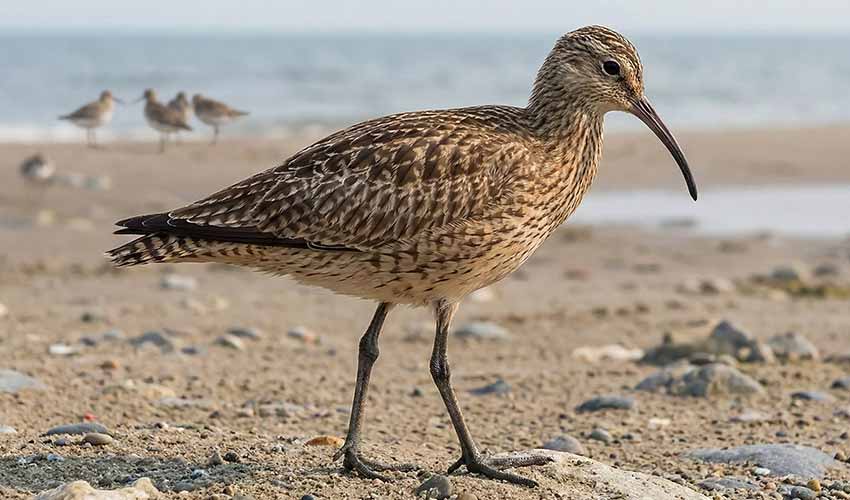


Eskimo curlew
Once a sky-filling spectacle—today, most of what we have are museum skins and stories

Far Eastern curlew
Biggest “sandpiper” on the planet
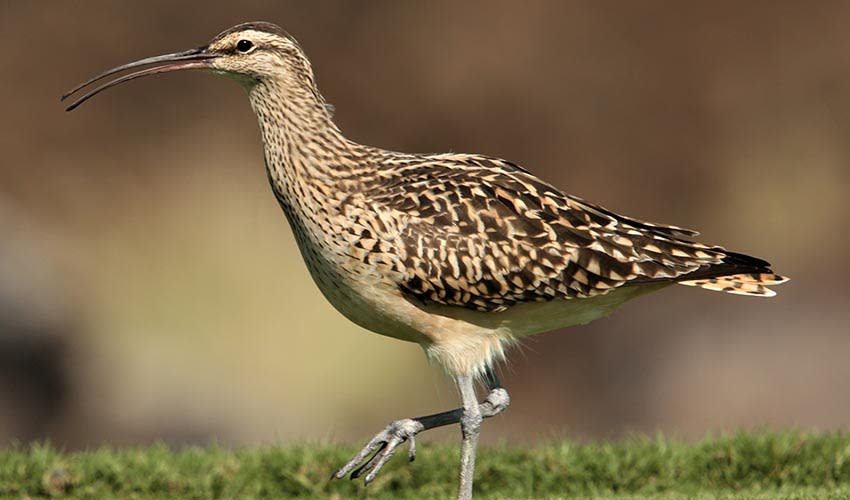
Bristle-thighed curlew
One of the only tool-using shorebirds
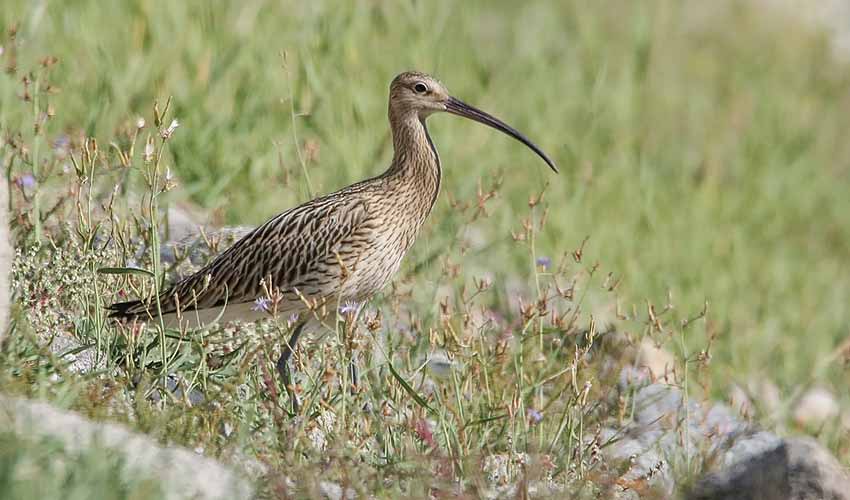
Eurasian curlew
Has the longest bill of any wading bird

Long-billed curlew
While that eight-inch bill looks like a solid piece of bone, the very tip of it is actually flexible

