Phoebetria – Sooty albatrosses
Most at home in the far southern oceans, where weather is rough and winds are intense—conditions that actually help them fly
A small but striking group of seabirds that breaks many of the stereotypes people have about albatrosses. Instead of being mostly white and bulky, Phoebetria species are dark, slim, and sharply elegant. The group includes two species: the sooty albatross and the light-mantled albatross. Both are masters of long-distance flight, spending most of their lives over the open ocean and returning to land only to breed.
What truly sets sooty albatrosses apart from other albatross groups is their dark coloration and athletic build. Their plumage ranges from deep brown to smoky black, often paired with a paler face or mantle, creating a dramatic contrast. This gives them a sleek, almost shadowy appearance as they glide above the waves. Compared with the larger, heavier albatrosses, Phoebetria species are more agile and responsive in flight, able to maneuver smoothly through strong winds. Watching one fly can feel like watching a perfectly balanced machine—barely flapping, subtly adjusting wing angles, and letting the wind do most of the work.
Sooty albatrosses are birds of the far southern oceans, especially in the southern Atlantic and Indian oceans. These are regions known for powerful winds, cold waters, and rapidly changing weather. Instead of avoiding such conditions, Phoebetria thrives in them. Strong winds help them travel efficiently over vast distances while searching for food. They feed mainly on squid and fish near the ocean’s surface, sometimes taking advantage of natural ocean activity that brings prey closer to the top. Their lifestyle is built around patience and movement: long glides, careful searching, and sudden, precise feeding actions when the moment is right.
When breeding season arrives, Phoebetria albatrosses return to remote, rugged islands that few humans ever visit. They often choose steep slopes, cliffs, or windswept ground where predators are limited. Unlike some albatross species that form dense, crowded colonies, these pairs tend to nest more spread out, giving their breeding areas a quieter, more solitary feel

Species in this genus


Sooty albatross
It’s the “dark-themed” albatross
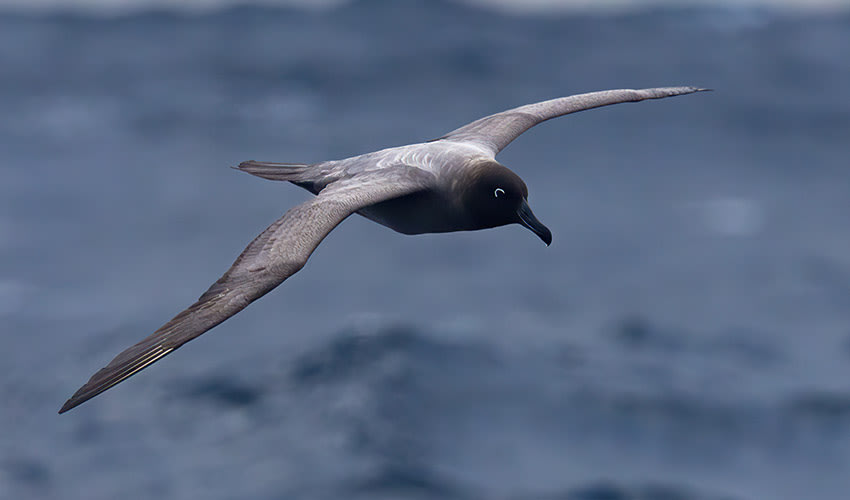
Light-mantled albatross
Often considered one of the most beautiful albatross species because of its soft gray coloring and gentle contrast

