Primolius
Known for their intelligence, agility, and more subtle elegance compared to their larger macaw relatives
Birds in this genus are often called “mini-macaws,” though they still share the long tails, strong hooked beaks, and expressive personalities typical of macaws. Species in Primolius are mainly found in forests, woodlands, river edges, and savannas, where they move confidently between trees and open spaces.
One of the most defining characteristics of Primolius macaws is their balanced size and build. They are smaller and lighter than large macaws like scarlet or blue-and-yellow macaws, which allows them to be more agile flyers. Their wings are long and narrow, enabling fast, direct flight over long distances, while their tails help with steering and balance. Their plumage usually combines shades of green, blue, and yellow, often with subtle facial markings that give each species a distinct look without being overly flashy.
The beak of Primolius macaws is strong and well-adapted for a varied diet. These birds feed on fruits, seeds, nuts, berries, and palm fruits, using their beaks to crack hard shells that many other birds cannot open. This feeding ability allows them to take advantage of seasonally abundant but difficult-to-access food sources. Like other macaws, they also use their feet skillfully, holding food items while eating, showing a high level of coordination and problem-solving ability.
Social behavior is another key trait of the genus Primolius. These macaws are highly social and are most often seen in pairs or small flocks. They communicate using loud, sharp calls that help maintain contact while flying or feeding. Pair bonds are strong, and mates often stay close to each other throughout the day, flying together and resting side by side. This strong social structure helps them protect one another and locate food more efficiently.

Species in this genus
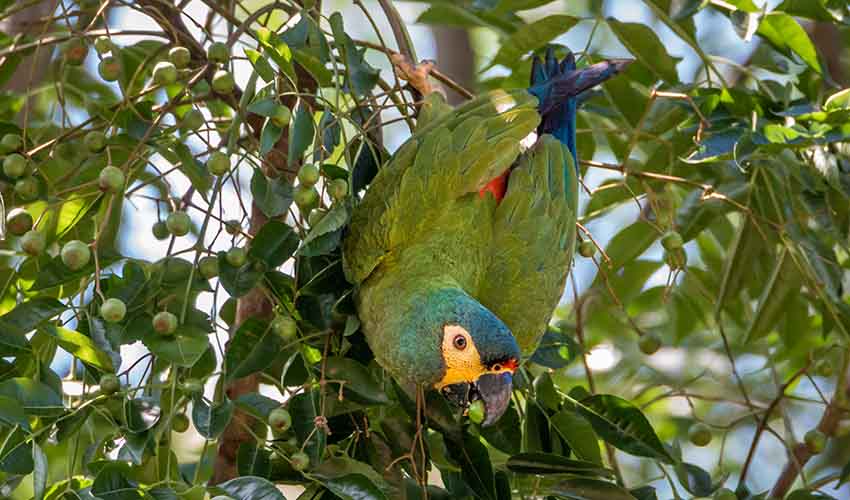


Blue-winged macaw
Its blue wing feathers are most vivid when the bird is flying rather than perched

