Pronolagus – Red rockhares
To them, a scorched slope is a fresh salad bar waiting to happen
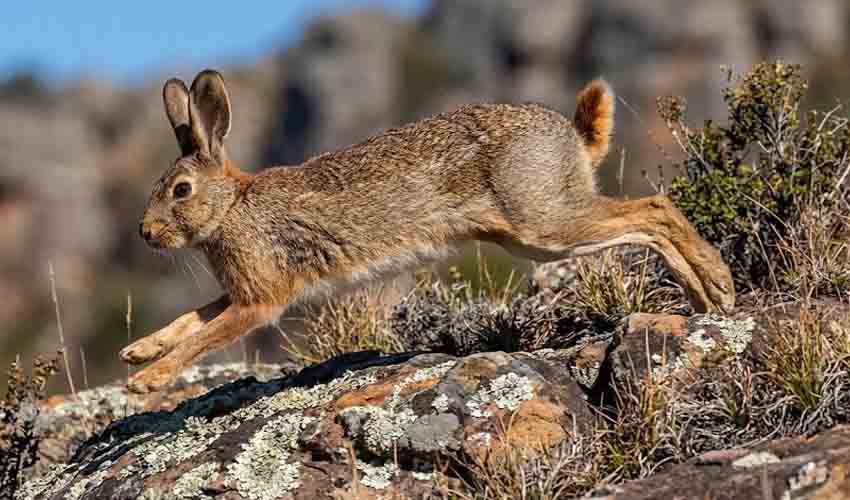
Red rockhares, grouped in the genus Pronolagus, are like the stealthy, rock-climbing cousins of more familiar rabbits and hares. Instead of soft meadows, they choose rugged hillsides and rocky slopes across southern Africa, tucking themselves into cracks and ledges by day and roaming under the cover of darkness. Their most striking feature is right in the name: a rich rusty-red coat that blends almost perfectly with sun-baked stones and red soil. Add a fluffy, reddish tail often tipped with darker fur, long ears, and big dark eyes, and you get an animal that looks both elegant and perfectly camouflaged. They’re roughly the size of a small house cat—bigger and leggier than a pet rabbit, but not as large as a jackrabbit you might picture from cartoons.
While many hares sprint across open grassland, Pronolagus species treat boulder fields like obstacle courses. When alarmed, they don’t just run in a straight line; they weave between stones, dart behind bushes, and dive into narrow crevices that predators can’t easily enter. Their long, thin legs give them quick acceleration and nimble jumps, while their ears act like living radar dishes, constantly swiveling to pick up the slightest sound of an approaching owl or jackal. Rocky shelters also help them beat the heat: cracks and caves are cooler than the open air, and their big ears help dump extra body heat on warm nights, like built-in cooling fins.
Most red rockhares are shy, solitary creatures. During the day they hide out alone or as a small family in well-chosen retreats, emerging at dusk to feed. Their diet is mostly grasses, herbs, and leaves, but they’re especially fond of fresh green shoots that pop up after rain—or after a fire has swept through and new growth starts to appear. In that sense, they’re “fire-followers,” turning blackened hills into freshly opened salad bars.

Species in this genus


Hewitt’s red rock hare
It’s most at home in cooler, higher ground with lots of rocks and cliffs, away from people
Jameson’s red rock hare
Its rusty-red and brown fur isn’t just pretty—it’s nearly the same color as the rocks and soil it lives on
Natal red rock hare
Basically a “rock rabbit” that treats cliffs like home
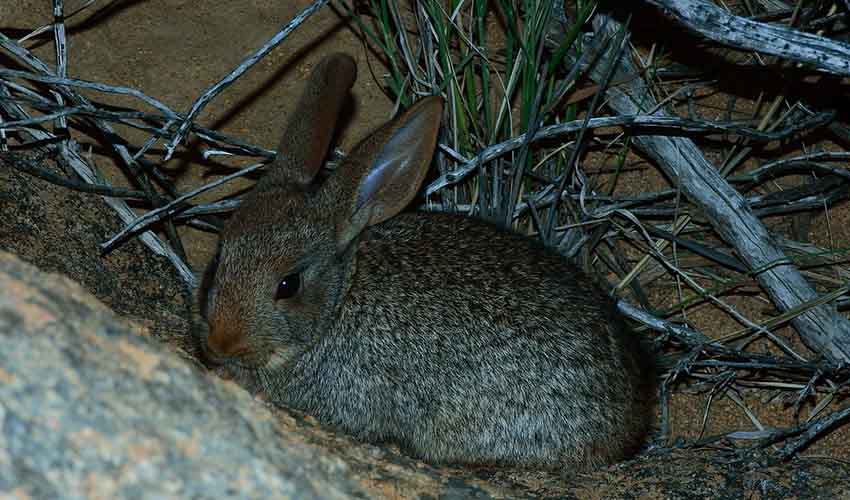
Smith’s red rock hare
From a distance, it looks more like part of the rock than a living animal

