Telmatobius
If their water becomes polluted, dries up, or is disturbed, they may have nowhere else to go
These frogs are often called Andean water frogs because many live in cold streams, lakes, wetlands, and high-mountain waters. What makes them stand out from many other frog families is their close association with water. While many frogs split their time between land and water, Telmatobiidae frogs often spend most, or even nearly all, of their lives in wet places. Some live in fast-moving streams, while others survive in chilly mountain lakes where the air is thin, and temperatures can be harsh. Their bodies are built for a watery life, with strong legs, smooth skin, and habits that help them stay hidden among rocks and plants.
One of the most famous members of this family is the Lake Titicaca water frog, sometimes jokingly called the “scrotum frog” because of its loose, folded skin. That nickname may sound funny, but the folds are actually very useful. The extra skin helps the frog take in more oxygen from the water, which is important because Lake Titicaca sits high in the mountains, where oxygen levels are lower than in many other places. This makes Telmatobiidae different from many frogs, which rely more on breathing air at the surface. Some of these frogs can stay underwater for long periods, quietly resting on the bottom like little living stones.
Telmatobiidae frogs are also special because they are tough survivors in extreme environments. Many live in cold, high-altitude environments where other frogs would struggle. Instead of needing warm tropical ponds, they have adapted to icy streams, rocky lakeshores, and mountain wetlands. Their colors are often brown, gray, olive, or dull green, which may not seem flashy, but these shades help them blend perfectly with mud, stones, and water plants. Their quiet appearance is part of their survival strategy. Unlike bright frogs that warn predators with bold colors, these frogs stay safe by hiding, staying still, and matching their surroundings.

Species in this genus
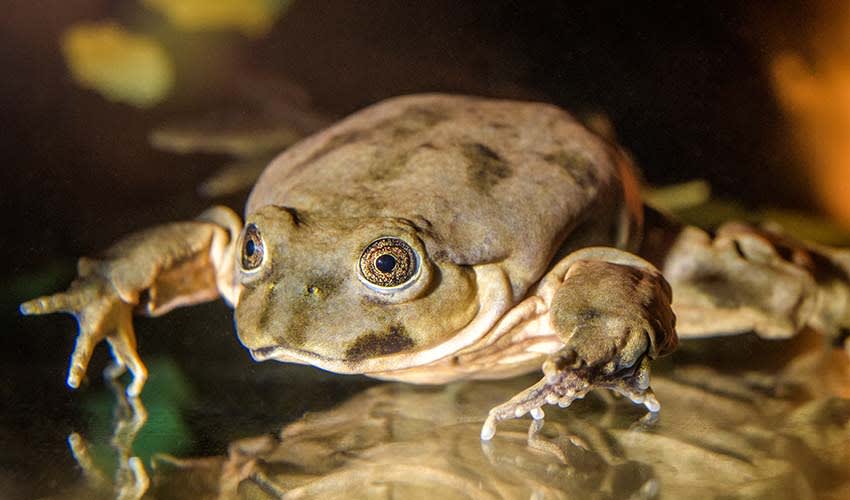


Titicaca water frog
A rare, weird, and wonderful survivor of one of the highest great lakes on Earth

