


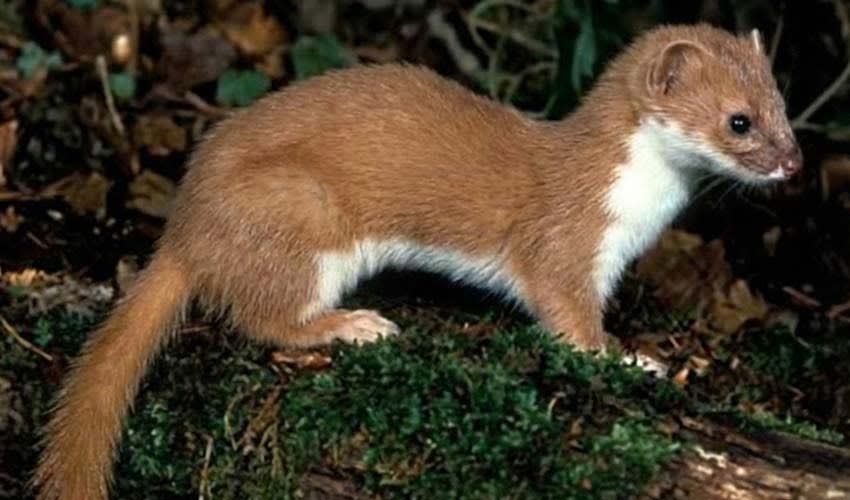
One of the most mysterious small hunters in the world, a slim, quick-bodied animal built like a living ribbon for chasing prey through tight spaces. It has the classic weasel shape—long body, short legs, and a sharp, curious face—designed for slipping under roots, into holes, and through tangled vegetation where bigger predators can’t follow. Its coat is usually described as rich brown on top with paler fur underneath, a practical look that blends into forest shade and muddy river edges. Like other weasels, it’s likely fast, bold for its size, and constantly “on the move,” with a restless energy that suits an animal that survives by finding meals often rather than eating one huge meal and resting.
What really sets the Amazon weasel apart is not just its looks, but how little we see it. Compared with many weasels in North America or Europe that people regularly spot near fields and forests, the Amazon weasel is rarely encountered, even by researchers. It lives in a vast, dense landscape where animals can stay hidden for a lifetime, and sightings are so uncommon that it can feel like a “ghost” of the rainforest. It also stands out among South America’s weasel relatives because the region has very few true weasels, and this species seems especially tied to humid lowland forest.
Because it’s so hard to study, much of what we say about its day-to-day life comes from what weasels are generally good at: hunting small animals, raiding nests, grabbing insects, and using speed plus surprise to win fights against prey that may be nearly as big as they are. A weasel’s body is basically a built-in advantage in the rainforest—long and narrow for diving into burrows, flexible for twisting through vines, and light enough to climb or scramble when needed.
Distribution
 Bolivia
 Brazil
 Colombia
 Ecuador
 Peru
PeruAnything we've missed?
Help us improve this page by suggesting edits. Glory never dies!
Suggest an editGet to know me
Terrestrial / Aquatic
Altricial / Precocial
Polygamous / Monogamous
Dimorphic (size) / Monomorphic
Active: Diurnal / Nocturnal
Social behavior: Solitary / Pack / Herd
Diet: Carnivore / Herbivore / Omnivore / Piscivorous / Insectivore
Migratory: Yes / No
Domesticated: Yes / No
Dangerous: Yes / No




