


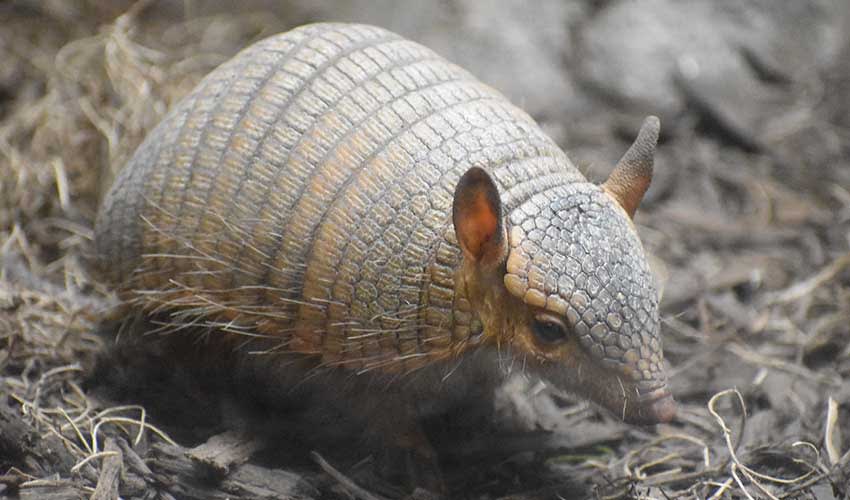
A small, scruffy-looking armadillo with a big personality. Its armor is the usual armadillo “shield,” but what makes it look different right away is the shaggy hair that sticks out between the plates and along the sides, giving it a slightly unkempt, fuzzy-edged outline. It has a long snout for sniffing out food, sturdy legs, and strong claws that look oversized for its body—perfect tools for digging. It lives in dry, open places like scrublands and sandy plains, where it can blend into dusty ground and disappear into a burrow at short notice. Compared with larger armadillos, it’s more compact and lightweight, built for quick trips between feeding spots and shelter.
The “screaming” part isn’t an exaggeration. When it feels trapped or grabbed, it can let out a loud, high-pitched squeal that sounds startlingly dramatic for such a small animal. This isn’t a battle cry—it’s more like an alarm and a last-ditch “put me down!” signal. Many animals vocalize when stressed, but this species is especially famous for the sharp, attention-grabbing quality of its squeal, which is one reason it stands out from other armadillos people encounter. Instead of relying on curling into a tight ball (a trick only a few armadillos can truly do), it leans on a mix of defenses: tough armor, fast digging, and quick retreats into burrows.
What also distinguishes the screaming hairy armadillo from close relatives—like the bigger, heavier “big hairy” armadillos—is its smaller size and its strong link to sandy soils where digging is easier and burrows are more stable. It tends to be an efficient “forager on a schedule,” often timing activity for cooler parts of the day or night. Food-wise, it’s not a picky eater: it hunts insects and grubs, digs up tasty larvae, and may snack on other small items it finds while rooting around.
Distribution
 Argentina
 Bolivia
 Chile
Chile Paraguay
 Peru
PeruAnything we've missed?
Help us improve this page by suggesting edits. Glory never dies!
Suggest an editGet to know me
Terrestrial / Aquatic
Altricial / Precocial
Polygamous / Monogamous
Dimorphic (size) / Monomorphic
Active: Diurnal / Nocturnal
Social behavior: Solitary / Pack / Herd
Diet: Carnivore / Herbivore / Omnivore / Piscivorous / Insectivore
Migratory: Yes / No
Domesticated: Yes / No
Dangerous: Yes / No




