


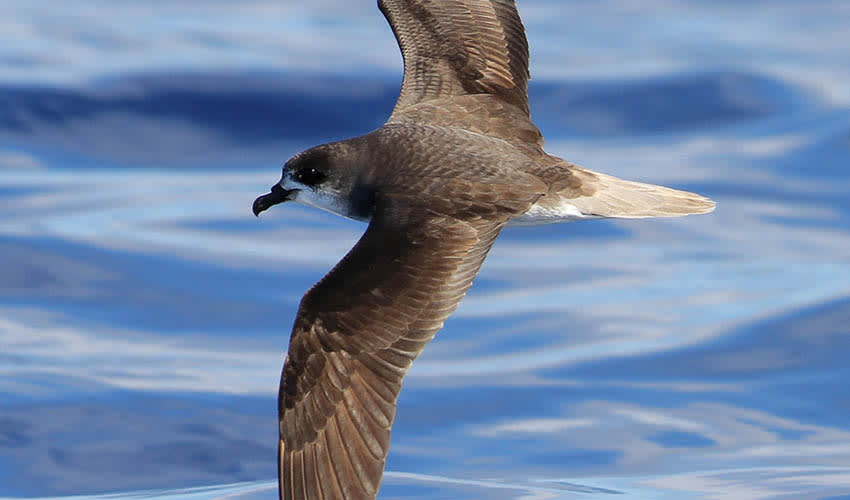
One of the rarest seabirds in the world and one of the most mysterious. It spends nearly its entire life far out over the Atlantic Ocean, gliding above waves and disappearing beyond the horizon. Only when it is time to breed does it return to land, and even then, it chooses one of the most hidden places possible. This small, elegant petrel nests only on the high mountain cliffs of Madeira, a rugged island off the coast of Portugal. With long wings, a slim body, and a graceful flight style, it is perfectly built for life at sea. From a distance, it looks neat and clean, with pale gray underparts, darker wings and back, and a gentle, dove-like face. Most people on Earth will never see one, which makes every sighting feel special.
What makes Zino’s petrel truly unique is its rarity and secrecy. Many seabirds breed on multiple islands or in large colonies, but this species has chosen a single mountain range as its home. The birds nest in small burrows and crevices tucked into steep slopes, often covered in mist and cloud. During the day, the breeding areas are almost silent. At night, however, the place comes alive with soft calls as adults return from the ocean to feed their chicks. Compared with other petrels, Zino’s petrel is smaller and more delicate-looking, with softer colors and a gentler appearance. These subtle differences help experts tell it apart from its close relative, Fea’s petrel, which lives on nearby islands but looks slightly darker and bulkier.
Like many seabirds, Zino’s petrels can live for decades, returning again and again to the same nesting areas. They are excellent navigators, able to roam vast distances over empty water and still find their way back to the exact mountain slopes where they were born. This ability makes them seem almost magical, as if they carry an invisible map inside their heads.
Distribution
 Portugal
 Official estimate
Anything we've missed?
Help us improve this page by suggesting edits. Glory never dies!
Suggest an editGet to know me
Terrestrial / Aquatic
Altricial / Precocial
Polygamous / Monogamous
Dimorphic (size) / Monomorphic
Active: Diurnal / Nocturnal
Social behavior: Solitary / Pack / Herd
Diet: Carnivore / Herbivore / Omnivore / Piscivorous / Insectivore
Migratory: Yes / No
Domesticated: Yes / No
Dangerous: Yes / No




