Dryophytes – Ameroasian tree frogs
One moment they’re bright green, the next they’re grayish-brown
A lively and colorful group of treefrogs that perfectly captures what people imagine when they think of frogs leaping through lush greenery. Belonging to the family Hylidae — the “true treefrogs” — these amphibians are small, charming, and perfectly built for life among leaves and branches. With their sticky toe pads, elastic legs, and expressive eyes, they’re expert climbers and acrobats of the amphibian world.
One of the most fascinating things about Dryophytes frogs is their adaptability. While most people picture them perched high in tropical trees, many species actually thrive in temperate regions — surviving freezing winters, dry summers, and everything in between. Some, like the gray treefrog, can literally freeze solid and thaw out again when temperatures rise, thanks to special sugars in their blood that act like natural antifreeze. Others, such as the Suweon treefrog, live closer to the ground in rice paddies and wetlands, proving that “treefrog” doesn’t always mean “lives in a tree.” This flexibility has helped the genus spread widely, with over a dozen recognized species hopping across diverse environments from the swamps of the southern United States to the forests of East Asia.
Behaviorally, Dryophytes frogs are masters of sound. Each species has its own distinct call — from the rhythmic croak of the American green treefrog to the rapid trills of the gray treefrog or the soft, high-pitched notes of the Suweon treefrog. Males use these calls to attract females and to stake out territory, turning nighttime wetlands into vibrant, musical choruses. Some species are even smart enough to adjust the timing or pitch of their calls to avoid overlapping with other frogs nearby — nature’s version of polite conversation!

Species in this genus


Suweon treefrog
Uniquely Korean as kimchi and hanbok
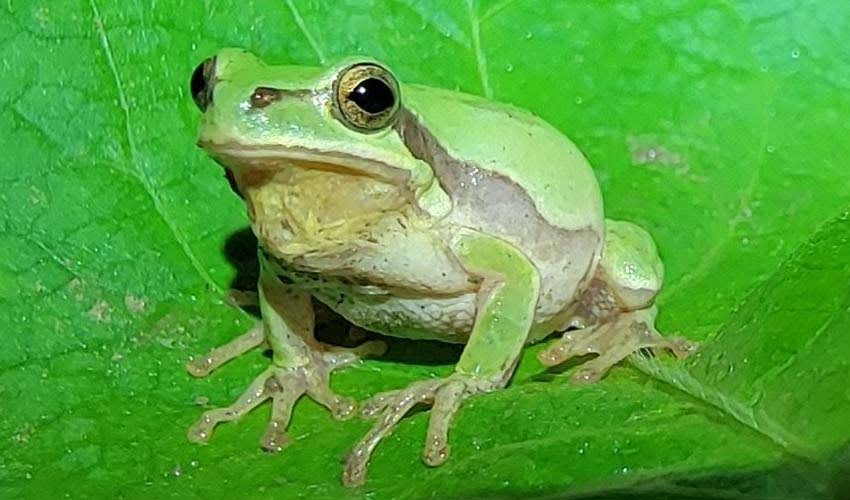
Chinese immaculate treefrog
For a creature barely larger than a thumb, this frog can belt out surprisingly loud calls

