Gehyra – Web-toed geckos
Their skin is so delicate that it can tear when grabbed—an effective escape strategy against predators
Found across Southeast Asia, Australia, the Pacific Islands, and parts of the Indian Ocean region, these geckos have quietly conquered both wild habitats and urban spaces. They’re best known for their webbed toes, soft translucent skin, and their uncanny ability to cling to almost any surface—from smooth glass windows to the rough bark of rainforest trees. Subtle in appearance but extraordinary in behavior, the Gehyra geckos are true examples of how evolution turns simplicity into success.
Their skin is often soft, velvety, and somewhat translucent, showing pale pinks, grays, or browns mottled with darker patches—perfect camouflage for blending into bark, rocks, or even the walls of homes. Unlike some geckos with rough scales, Gehyra species have smooth, delicate skin that can tear easily if handled, allowing them to escape predators—hence their nickname “skin-slippers” in some regions. Their broad, webbed toes are equipped with specialized adhesive pads, allowing them to climb vertical and even inverted surfaces effortlessly. This adaptation makes them equally at home in tropical forests, dry woodlands, and city walls.
Web-toed geckos are nocturnal hunters, emerging at night to feed on small insects, spiders, and other arthropods. They are particularly fond of lighted areas where insects gather—often seen patrolling walls near lamps or streetlights. In their natural habitats, they hunt along tree trunks, rock faces, and cave walls, using stealth and precision to snatch prey with their quick, sticky tongues. When threatened, they can shed their tails as a distraction, which later regenerate, though the new tail often appears shorter and smoother.

Species in this genus
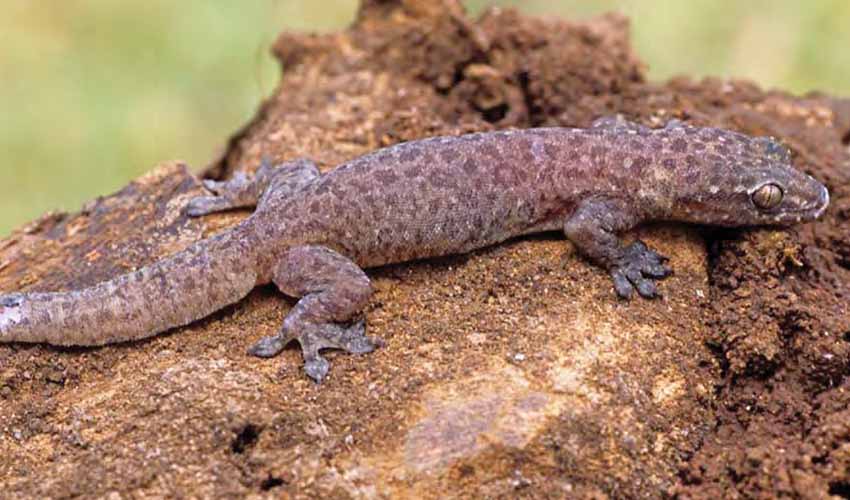


Stump-toed gecko
Its thin, translucent skin gives it a ghostly appearance under bright light

