Pipile – Piping guans
Unlike most birds that sip and tilt back, they can drink continuously without raising their heads, similar to pigeons
The genus Pipile includes a group of striking, forest-dwelling birds known as piping guans, found mainly in tropical forests of South America. These birds are part of the chachalaca–guan–curassow family, but they stand out with their slim bodies, glossy dark plumage, pale feather highlights, and brightly colored wattles at the base of the bill. Their overall appearance has a gentle elegance — a bit like a small turkey with a rainforest twist — and their name comes from the soft, flute-like “piping” calls they make, often heard echoing through the canopy at dawn.
Piping guans are arboreal specialists, spending most of their time high in trees, where they forage for fruit, seeds, leaves, and flowers, playing an important role as seed dispersers in healthy forests. They move with quiet agility, hopping from branch to branch, and prefer living in small family groups or loose flocks rather than alone. Their flight is strong but typically brief — powerful wingbeats to cross forest gaps, followed by graceful glides. During courtship, males may perform subtle displays, fluffing their feathers and calling softly to attract a mate.
Though naturally shy, these birds are highly vulnerable. Several species in Pipile face population declines due to habitat loss, hunting, and fragmentation of tropical forests. Because they rely on large, intact forest landscapes and have relatively slow population growth, they are considered sensitive indicators of rainforest health. Conservation biologists pay close attention to them — when piping guans disappear, it’s usually a sign that a forest is under serious pressure.

Species in this genus
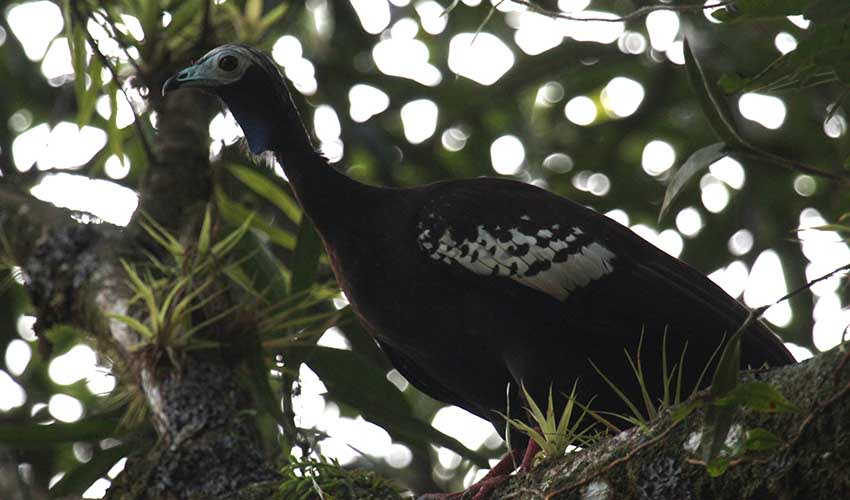


Trinidad piping guan
A relict species, surviving from a time when Trinidad’s fauna had stronger ties to mainland South America
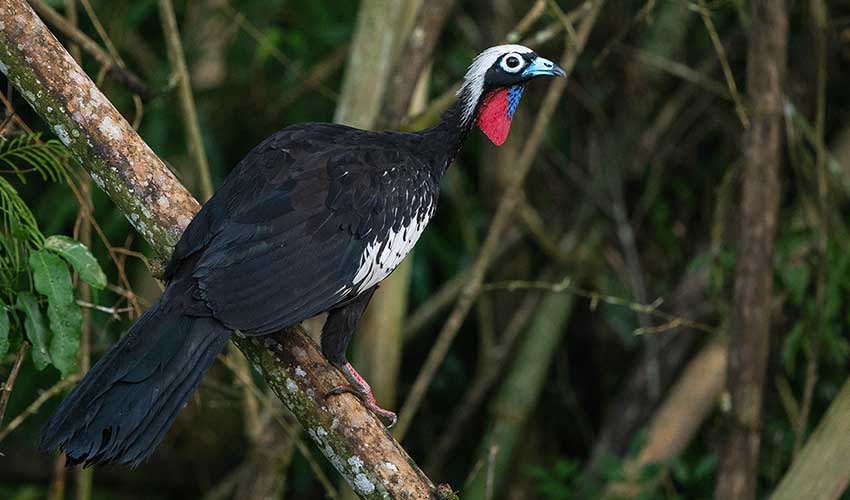
Black-fronted piping guan
The bold black forehead against white feathers makes it one of the easiest guans to recognize at a glance
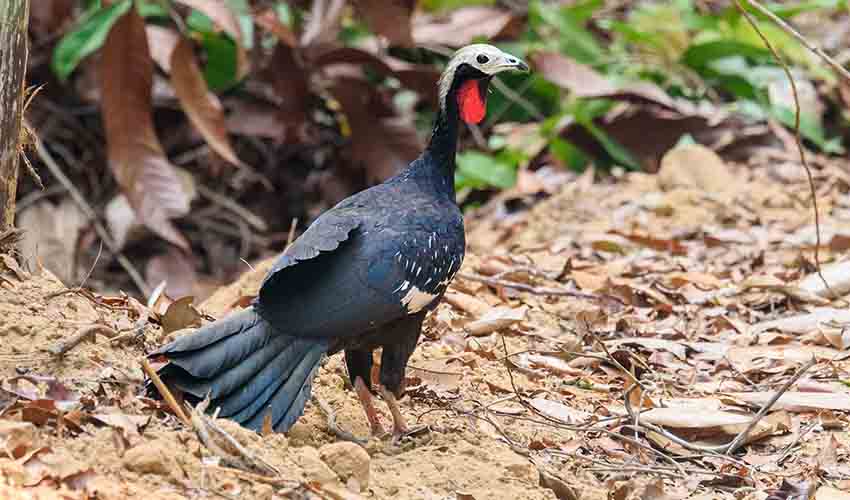
Red-throated piping guan
Look almost like a tuxedo-clad acrobat moving rapidly through the treetops

