Pluvialis
Tiny birds, huge journeys
A fascinating group of medium-sized shorebirds known for their striking plumage, long-distance migrations, and charming, upright silhouettes that make them stand out among other waders. Although each species has its own geography and personality, they share signature features—rounded bodies, short bills, long wings, and a clean, elegant look that birdwatchers love. Many also shift between two dramatically different color forms depending on the season, making them some of the most eye-catching birds on the tundra and the shore.
One of the most distinctive characteristics of the Pluvialis genus is the striking breeding plumage many species display. Golden plovers, for example, dazzle with their black faces, throats, and bellies set sharply against bright white borders and shimmering gold-speckled backs. The Grey plover, though less golden, likewise transforms into a bold black-bellied beauty during the Arctic summer. In winter, all members of the genus soften into mottled greys and browns, blending perfectly into beaches, mudflats, and grasslands. This dramatic wardrobe change reflects their dual lifestyles—flashy for courtship in the Arctic, subtle for camouflage during migration and wintering.
The genus is also remarkable for its extreme migratory abilities. Pluvialis species are some of the world’s most impressive globe-trotters. The American and Pacific Golden Plovers undertake astounding journeys across oceans, flying from the Arctic to South America, Asia, or islands in the Pacific. The Pacific Golden Plover, or “kolea” in Hawai‘i, is especially famous for returning to the same lawn, park, or rooftop every year. Grey plovers, meanwhile, are truly global wanderers, wintering on coastlines across every major continent except Antarctica. These enormous migrations rely on incredible endurance, navigational skills, and the ability to build large fat reserves before departure.
Behaviorally, Pluvialis species share a distinctive stop-run-pause foraging style. Instead of constant pecking like many sandpipers, they use quick bursts of movement followed by stillness—almost like they’re playing a tiny game of red light–green light while scanning for prey. This makes them easy to spot even from a distance. Their diet typically includes insects, small crustaceans, marine worms, and occasionally berries during the breeding season.

Species in this genus


Grey plover
Can be black, can be grey but it’s the same bird

American golden plover
These birds perform a massive, circular migration that covers nearly 32,000 km (20,000 miles) annually
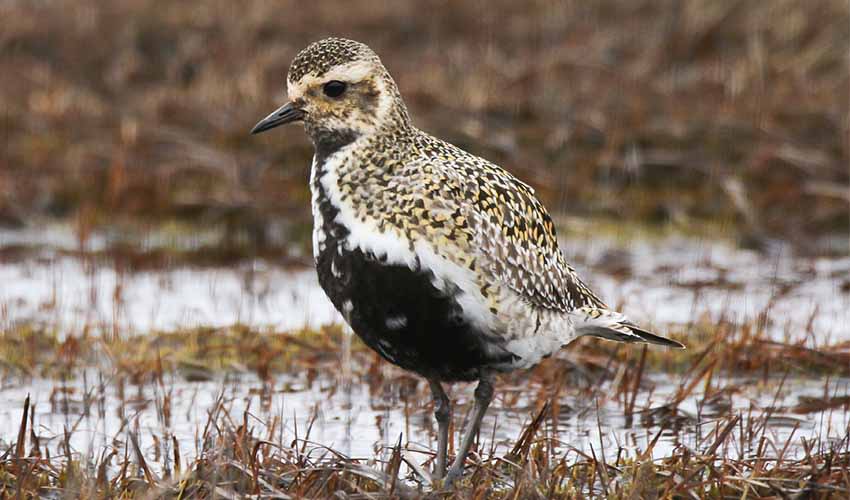
European golden plover
Tough enough to navigate wild coastal winds and freezing temperatures

Pacific golden plover
Before their 3,000-mile flight, they become “hyperphagic,” eating until fat makes up nearly half of their body weight

