Poiana
They got this "mini leopard" vibes
These little hunters live in the forests of Central and West Africa, slipping through the branches like shadows. Their bodies are long and slim, with short legs and a very long tail that can be almost as long as the rest of their body. Their fur is beautifully patterned with spots and stripes in dark brown or black on a yellowish or cream background, giving them a “mini big-cat” look. This pattern isn’t just for style—it helps them blend into the dappled light of the forest, where sun and shade mix on leaves and branches. If you didn’t know where to look, you could easily walk right past one without noticing.
One of the coolest things about Poiana is how perfectly they’re built for life in the trees. They are mostly active at night, padding softly along branches as if they’re walking on tightropes. Their long tails act like balance poles, helping them keep steady as they move, leap, and twist through the canopy. They can even wrap their tails around branches for extra grip, giving them amazing control above the ground. Their feet are flexible and their claws are sharp, so they can climb up, down, and sideways with ease.
When it’s time to hunt, they use their big, bright eyes and sharp hearing to detect the slightest rustle made by a sleeping bird, a small lizard, or a mouse. Then they move in quickly and quietly, like tiny forest ninjas, seizing their prey before it even knows they’re there.
Despite being skilled hunters, Poiana are very shy and rarely seen, which gives them a bit of a “mystery animal” status. Many people who live near their forests may never actually spot one, even in a lifetime. Scientists also don’t know as much about them as they do about more common animals like lions or monkeys, simply because Poiana are so good at hiding.

Species in this genus
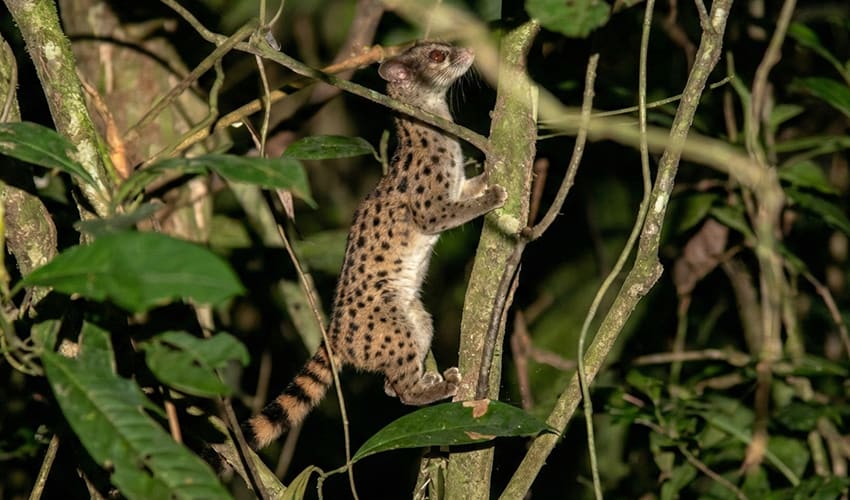


Central African oyan
So rarely seen that a clear photograph of it can make wildlife nerds genuinely excited

