Thalassarche – Mollymawks
With a few subtle wing tilts, they can ride ocean gusts for hours without breaking a sweat (or a feather)
These medium-sized albatrosses roam the windswept oceans of the Southern Hemisphere, gliding effortlessly over endless waves with a mastery of flight that borders on magical. The name Thalassarche itself comes from Greek, meaning “ruler of the sea,” and it fits perfectly: these birds spend most of their lives far from land, ruling the open ocean skies with grace, endurance, and a touch of mystery.
Mollymawks are slightly smaller than their wandering albatross cousins, but they’re just as impressive. Most species, like the Black-browed Albatross (Thalassarche melanophris) and the Shy Albatross (Thalassarche cauta), are distinguished by striking contrasts of white, gray, and black feathers, sleek wings built for dynamic soaring, and brightly colored bills — ranging from soft yellow to vivid orange or pink. They use ocean winds like invisible highways, barely flapping as they glide for hours or even days at a time. These birds are so perfectly adapted to flight that when they return to land, usually only to breed, they seem almost out of place — clumsy walkers with all the grace of a penguin in a windstorm.
Like all albatrosses, members of Thalassarche are devoted partners and meticulous parents. They breed on isolated islands scattered across the Southern Ocean — from Tasmania and New Zealand to the Falklands and South Georgia. Their nests are sturdy, mud-built towers where a single egg is laid each season. Both parents take turns incubating and foraging at sea, sometimes traveling hundreds or thousands of kilometers in search of squid, fish, and crustaceans. When reunited, pairs greet each other with elaborate displays — synchronized bill clacks, wing stretches, and head bobs that look like a carefully choreographed dance. Many of these pair bonds last for life, making them one of nature’s truest examples of avian loyalty.

Species in this genus


Atlantic yellow-nosed albatross
This bird can circle the South Atlantic without breaking a sweat (or a wingbeat)

Grey-headed albatross
Built to “ride the wind,” using long glides and smooth turns to save energy

Indian yellow-nosed albatross
Unlike many albatross species, it often prefers slightly warmer ocean waters
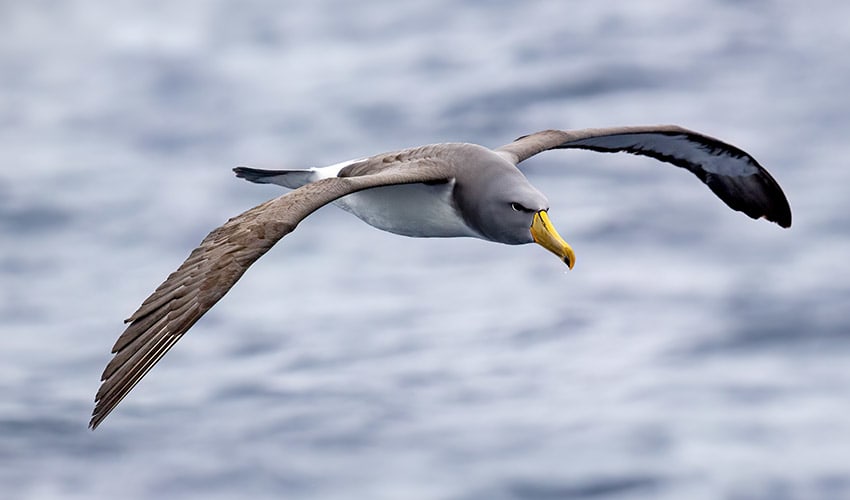
Chatham albatross
Thrive in strong winds that actually help them fly

Salvin’s albatross
Can fly thousands of miles without a single flap

Shy albatross
Often follow ships and fishing boats, attracted by food stirred up near the surface

