Todiramphus
Not just fishers—most of them have insects as the main menu
A dazzling group of kingfishers found across the tropical and subtropical islands of the Australo-Pacific—stretching from the Red Sea and Arabian region eastwards across Southeast Asia, the Pacific islands and down to Australia and New Zealand. These birds are not your stereotypical river-edge fish-catchers; many of them live far from open water, hunting instead in forests, mangroves, scrublands and even human-disturbed habitats. The name Todiramphus traces back to “tody-bill” (a reference to a smaller insectivorous bird) plus the Greek rhamphos, meaning bill—apt, because one of their standout features is a broad, flattened bill built for grabbing prey.
Members of the Todiramphus genus vary in size but share some common traits: vibrant colours (often blues, greens, or rufous), pale underparts, and a perching hunting style. Rather than diving into water, many wait on exposed branches or wires, then swoop down to snatch insects, lizards, frogs, crabs, or even small rodents. Their broad bills allow them to take larger prey than you might expect for a bird of their size. Nesting habits are equally fascinating: some dig burrows in termite mounds, others excavate into earthen banks or tree cavities, and quite a few hang their nests in termite nests or palms—demonstrating their uncanny ability to adapt to island life and weird micro-habitats.
What makes them truly compelling is their evolutionary diversity and island specialisation. On many remote islands, you’ll find a species found nowhere else, often adapted to the habitat quirks of that island—whether coast, mangrove, forest interior, or scrub. Genetic studies show they radiated rapidly in response to island-by-island opportunities, producing many species in relatively short geological time. Because they often require intact forest canopy, old trees or termite-mound nesting sites, their presence can signal healthy ecosystems—but they’re also vulnerable to habitat loss, invasive predators and human disturbance on islands.

Species in this genus
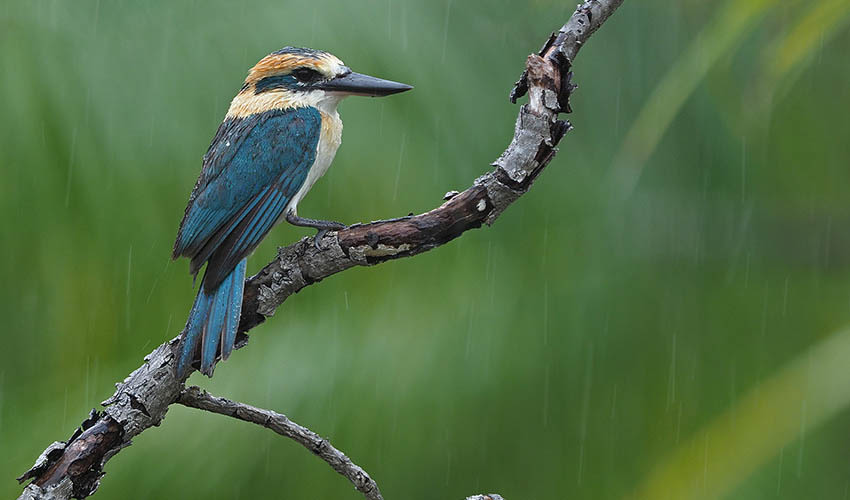


Tuamotu kingfisher
Its entire world fits onto just a few coral atolls, some of which can be walked across in minutes

Red-backed kingfisher
A desert hunter, feeding largely on insects, scorpions and ground-dwelling prey

