Cephalophus – Forest duikers
Famously elusive and can vanish into dense vegetation in seconds
These antelopes are known for their shy nature, compact bodies, and remarkable ability to move silently through thick vegetation. With more than a dozen recognized species—including the Blue duiker, Yellow-backed duiker, Red-flanked duiker, Black duiker, Bay duiker, and the endangered Aders’ duiker—Cephalophus represents one of the richest and most ecologically varied antelope groups on the continent.
One of the most distinctive features of Cephalophus duikers is their arched back and slightly hunched stance, which gives them a low profile and allows them to dart quickly through shrubs, vines, and forest undergrowth. Their bodies are sturdy but small, usually ranging from rabbit-sized species like the Blue duiker to dog-sized species such as the Yellow-backed duiker. Most have short, straight horns that are often concealed by a crest of hair on the forehead. Their coats vary widely in color—from deep blue-gray to rusty red, chestnut, glossy black, or even patterned with bold yellow patches.
Duikers are excellent browsers, feeding on fallen fruits, leaves, seeds, mushrooms, flowers, and occasionally insects or small vertebrates. Their name comes from the Afrikaans word duiker, meaning “diver,” a reference to how they dive into cover when alarmed. Many species have a behavior known as “hide-and-dash,” freezing at the first sign of danger and then sprinting in a zig-zag burst to disappear into vegetation within seconds.
The social structure of Cephalophus species varies, but most duikers are solitary or live in monogamous pairs, maintaining small home ranges. They communicate through soft vocalizations, scent marking, and body posture.
Despite their ecological importance, several Cephalophus species are threatened. Habitat loss due to logging, agriculture, and deforestation, combined with heavy pressure from the bushmeat trade, has caused population declines—especially in species with small ranges such as the Aders’ duiker, Zanzibar red duiker, and Ogilby’s duiker. Larger species like the Yellow-backed duiker are more resilient but still face increasing pressure.

Species in this genus
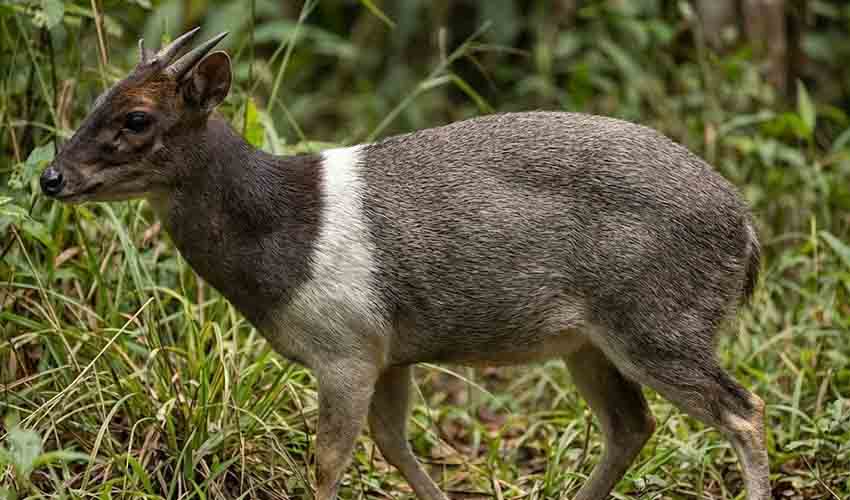


Jentink’s duiker
Being knee-high isn’t a weakness—it lets it slip through vine tangles and gaps where bigger animals can’t follow

Zebra duiker
Its bold black-and-gold stripes make it look like someone shrunk a zebra and mixed it with a forest antelope
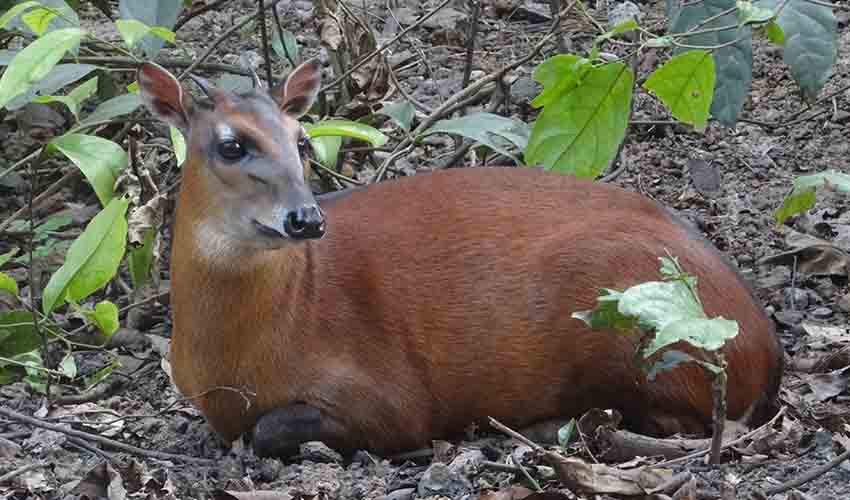
Bay duiker
Besides plants, they may nibble on fungi and other small forest finds when available, depending on what’s easy to get

White-bellied duiker
Looks like it’s wearing a dark jacket with a pale belly, which is the quickest visual clue behind its name

Yellow-backed duiker
It’s the biggest duiker of them all!
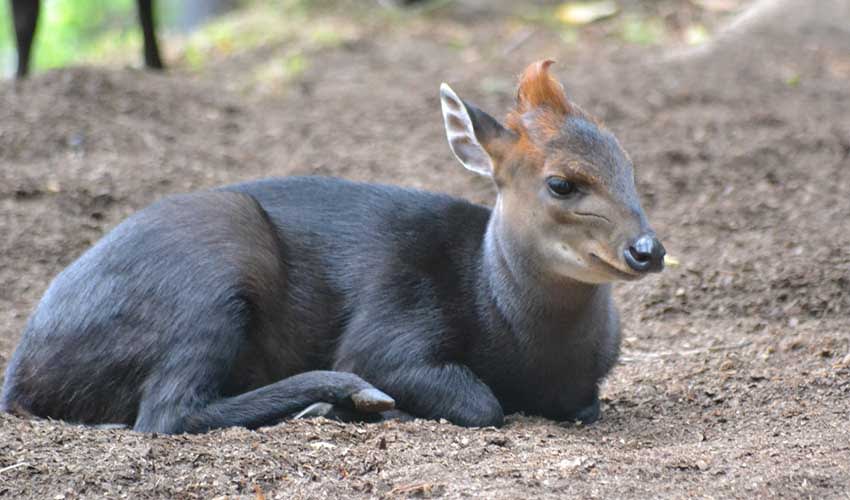
Black duiker
Specialized in darting through thick undergrowth—almost impossible for predators to follow

Black-fronted duiker
Often hang out under trees where monkeys feed, waiting for fruit to fall from above

Ogilby’s duiker
Even when it’s standing still, it can swivel its ears to track faint sounds—handy in a noisy forest

Red-flanked duiker
The word duiker means “diver,” and it shows why — it dives into bushes at the first sign of danger

Red forest duiker
Its rich, chestnut-red fur blends perfectly with leaf litter and forest shadows—like living autumn foliage

